Monday, July 19, 2010

Tool Distribution

Today is distribution of tools courtesy of FAO, the agriculture branch of the UN. Floresta Haiti is the distributor on their behalf. As I type this I can hear the crowd outside the office waiting patiently, some since about 7 am to get a pick, a machete, and a hoe. I am guessing there are about 500 people. The distribution is being organized through the locally elected leadership, and these leaders met this morning early to coordinate with staff.

Monday, July 05, 2010

Burundi update:

The situation here is calm and explosions have reduced, the president has been elected and communal officials are now being elected to their offices in the whole country. Legislatives are going to be held at the end of the week. The opposition is weakened and some of them are now coming back to participate in Legislatives. However, the situation is still volatile.

Wednesday, June 23, 2010

Have you ever wanted to spend a Saturday outdoors, but when you got up in the morning the signs were pointing to rain? You keep checking the forecast, and looking outside to see if you can figure out what's going to happen, but you just can't be sure. You really want to go but then you don't want to get soaked either.

One of Burundi's political leaders and a former guerilla has just disappeared and the rumour is that he has slipped quietly over the border into the Congo. This is a possible sign of rain. But Burundians have a big picnic planned and who wants to cancel?

It is just very discouraging when the people want to move forward, so much wanting peace and a better life while politicians only seem to want to play these deadly games with their citizens as the prize.

Monday, June 21, 2010

From Burundi:

This must remain an issue of prayer! It is quiet during the day but all nights there are grenades explosions in various parts of the country.
Yes one candidate for Presidential elections in on, but diplomatic efforts are multiplied for oppositions to join the parliamentary elections. If these fail to get a compromise, Burundi will be plunged in an very bad institutional crisis come August 2010. But we hope that they will manage to find a soluttion. Civil society and religious leaders have called for dialogue as well as the international community.
Differences so far are party based and not ethnic.
Keep us in your prayers and thoughts

Sunday, June 20, 2010

Another Burundi update:

Political situation is getting sensitive every day as Presideential elections with one candidate come closer. Grenades explosions are frenquent in many parts of the country atleast 6 of them are exploded every night.

Monday, June 14, 2010

Update from Burundi:
Our work is doing on slowly, but security situation is getting worse. On Saturday evening 4 grenades were blown in Bujumbura city and On Sunday evening more 2 were blown leaving behind injuries. A journalist of a local radio was killed yesteday after coming from work by bandits stealing from a fuel station.
Movements and public places are being now avoided. We do not know how the situation will evolve as days of presidential elections draw closer!

Wednesday, June 02, 2010

Burundi election update:

As a matter of prayer, we would like to join us in prayer for electoral process in Burundi. As soon as the local elections held on 24th May were announced, the opposition rejected for fraud allegations and called for new pulls and the resignation of the electoral independent commision before they can go for presidential elections scheduled on 28 June. Yesterday 5 presidential candidates from the opposition officially withdrew from the race. Only 1 opposition candidate remains on the race and has also joined others in calling for the annulation of the local elections before Presidentials.
There is a climate of fear on which road this process is going to take. Pray for God's intervention at this early stage.

Sunday, May 30, 2010

Burundi election update:

Situation here is calm although the theme of election rigging continue to grow high with many ballot boxes with votes not counted allegedly being discovered in many pulling stations. The electoral commission is trying to convince the public that they were still kept there for logistic problems! This may be very dangerous in future....

Wednesday, May 26, 2010

Another update from Burundi:

Bob,
I was able to go with [my wife] the day of voting. People were anthousiasts and voted in calm. Last night, the electral commission announced officially provisional results and the ruling party is coming ahead in all provinces expect in Bujumbura.
In general results are accepted although some irregularities were observed according to the commission and observers. But 8 opposition parties have contested the results that there were rigged. We do not know how it will evolve.
Keep us in prayer as Burundi prepares for the Presidential ahead.

Tuesday, May 25, 2010

Another excerpt from an email from Burundi:

Greetings from Bujumbura. Thank you for the photo and prayers for our country.

I am pleased to inform you that the first elections for districts passed in peace and these elections predict which party will win the presidential elections . The ruling party is excellently on top .

Monday, May 24, 2010

An excerpt from an email I received this morning from Burundi:

Local elections had started this morning after 2 days of postponment. In Muzye, Rutana porvince, a grenade exploded and wounded a police officer in the voting station in the early hours of Sunday (1:00 am). Those behind it have not yet been identified.
In general situation is calm but people are just fearful and tension among opponents is high. We keep praying and hope for the best.

Saturday, May 22, 2010

I have this thing where sometimes after a long-haul flight and I get out in the open air, its like my eyeballs have dried out our something. There's a burning sensation and if feels like my eyelids are sticking to the cornea. It is actually pretty painful, and my tearducts start working over time to compensate for whatever the irritation is. I haven't really figured out what is happening, but I know I don't like it. Today while standing on the curb, I could hardly keep my eyes open or see anything and tears were streaming down my face. I think the woman standing next to me thought I was getting all emotional about being in Canada.

Friday, May 21, 2010

Pretty much every time I go to Kilimanjaro, I stay in the same guesthouse just 10 minutes walk down the road from our office. And pretty much everytime on the first morning after my arrival, I put my briefcase over my shoulder with my laptop, etc, and start up the hill. Literally up, I think it is about a 30% slope so it is a bit of a work out. Usually I pass several school kids, who are traversing the road from side to side, slowly working their way up hill toward the school (they seem in no hurry). Pretty much everytime they greet me with "Good Morning", or "Jambo" (fake tourist Swahili said for my benefit). Pretty much everytime when I get to the top of the hill, I look for mount Kilimanjaro, which is visible about 30-40% of the time. Pretty much everytime I do see it, I feel compelled to set my briefcase down and take a picture (or two). The whole process is starting to feel like deja vu. This time, I did do something different which is check out the tree planting done by the local school with the-organization-I-work-for's support. This planting is probably about 3-4 years old now and doing quite nicely. Students and staff are taking good care of it, and in a few more years they will have a variety of fruits as well as a nice albeit small grove of trees. Check both my usual mountain photo and the primary school fruit tree grove photo below.


Wednesday, May 19, 2010

I very much regret having to leave Burundi. At least I would like to stay around until the first round of elections this Friday, but I'm already in Nairobi on my way to the next appointment. I guess no one knows for sure what is going to happen, and there is plenty of speculation about all kinds of possible outcomes, good and bad. I wish I had time to just tour around the country, asking people what they think and what they hope for. And I shouldn't criticize journalists too much for not being here; I myself am taking off.

Tuesday, May 18, 2010

Today I think you and I may have been witness to something remarkable. Since the communal elections are this Friday, today is the last official day of campaigning. Wednesday and Thursday I guess are supposed to be days of peaceful reflection, and election day itself is a national holiday. So today, every party was out on the street, walking, driving cars, renting buses, waving flags, singing, chanting and otherwise trying to show enthusiasm for the party of their choice. We got caught on a main street in a massive traffic jam of party colours and songs. What I saw was different groups from different parties saluting each other with their various party gestures but without malice or hostility. Really it felt to me more like a celebration of the freedom to participate than a belligerent contest. I was travelling in a car with a colleague who is actually from the Congo, and he was just laughing and enjoying the whole spectacle. He said to me,"Bob in all my life as a Congolese, I have only ever participated in one democratic election."

So I'm very hopeful. I know there are rumours out there that things could go badly, but right now, I think many are anxiously optimistic. What I wonder is, where is the press right now? This could potentially be a triumph of democracy, a country moving beyond its violent past, and yet, I see no cameras, no microphones. I did in Haiti. Journalist teams literally on every corner recording as much misery as can be fit into a 30 second clip. So where are they when they might actually have a shot at documenting humanity rising above our baser nature?
I've spent more time on this trip talking about breakfast than I have the elections. Truth is t here hasn't been a whole lot to say so far. Things have been very quiet, peaceful even. I have felt more relaxed and safe on this trip than any of my previous trips to Burundi. One expat who has lived here for several years said that it was almost too quiet.There have been a few politically motivated murders in the past week or so. A Burundian I know who is working quite closely with the election process says that people see an opportunity now to gain power, and they are willing to do anything to get it. However, this is interpreted in the light of rival versus rival, and so far at least, doesn't seem to indicate a pattern of wider social or ethnic violence. Numerous Burundians have expressed this to me in terms of asking God to continue to keep the country safe.

The very first round of elections for leaders at the commune level is this Friday.

Below is a somewhat poor shot of an election campaign parade. Which was mostly a vehicle with flags and loudspeakers. I have seen several larger demonstrations which may have had several hundred people, but these have also seemed relatively peaceful.

Sunday, May 16, 2010

Today was Sunday and therefore church plus some touring around Bujumbura seeing the various sites. But before all that there was breakfast. Sorry that my recent blogging seems to centre around food a lot, but below is a photo of this morning's breakfast. Not too terribly exciting except that it represents a small triumph in my struggle with the French language. Yesterday I tried to order a fried egg, and instead got an omelet and fried potatoes. After some language coaching from another guest here at the hotel, I made a second attempt this morning and I proudly display the results below. By the way, what looks like milk is actually yogurt, made here in many kitchens fresh the night before. Very tasty and no additives or gelling agents of any kind.

The next photo is on the Ruzizi river which is just outside Bujumbura and flows into Lake Tanganika. There are several families of hippos scattered up and down this area. I have never seen a hippo get up out of the water like this and was quite excited.

The final photo is of a monument marking the spot where Dr. Livingstone and Stanley famously met. Again in the background you can see Lake Tanganika and the mountains of Congo beyond. After meeting, Stanley went to the Congo from here, and Livingstone presumably went to Tanzania.

Saturday, May 15, 2010

Here is the shot of the view looking across Lake Tanganika to the Congo. A bit cloudy, but I think you can see the mountains which are not far off. I'm guessing 20km or so. An hour or so after this picture was taken, the lights of the town of Uvira, became visible. Went back to the same restaurant basically for the fish. And the view.

Friday, May 14, 2010

Tonight I had a meeting with 3 representatives of an education organization working in the Congo. We met appropriately, at a restaurant on the beach of Lake Tanganika where we could look across the lake to the mountains of South Kivu in the Congo itself. I am sorry I don't have a photo of this evening view of the mountains shrouded in haze. It is really quite a beautiful sight. As we talked about the needs in the Congo, the deforestation, the slash and burn, the conflicts in communities, I caught one of the Congolese staring wistfully across the lake. I am also sorry that I don't really have the right words to convey what a poignant moment it was. So I will just tell you that it was quite a poignant moment. Then we ate barbecued fish from the lake, Sangala, or Nile Perch. This I say again is the best fish I have ever had. There is also Nile Perch in Lake Victoria, but somehow it is not the same. Not sure what the explanation is, but I'm just happy that it exists. I should have taken a photo of this meal as well. And the mountains. I may still get a chance before this trip is over.

Thursday, May 13, 2010

Today is Ascension Day, and a national holiday here in Burundi. Most have the day off and many go to church in the morning. We worked anyway, at least til mid afternoon. The streets were very quiet, little traffic, either on foot or wheels. The whole situation is very peaceful, idyllic even, almost surrealistically so. At a dinner I attended yesterday evening, a prayer was given asking that God would continue to protect the country during the election campaign. Everyone, I think must be feeling this. It would surely be a major turning point if things could remain as they are throughout the next 3 months.

Wednesday, May 12, 2010

Today's Lunch

I know what you are thinking: "does Bob really think we care what he ate for lunch?" I don't blame you, but please wait for the explanation. If you look at the photo you will see a green sauce on the left and a white cake like thing on the right. Both of these are from cassava (or manioc). The sauce is made from the leaves, and the cake, called ugali is made from the root. Both are quite tasty by the way, and a mainstay of the diet here. The organization I work for is helping farmers to obtain disease resistant varieties of cassava, since the older varieties have become susceptible to a mosaic virus which seriously reduces productivity. Farmers in our target communities are not only producing more cassava for themselves, they are also able to sell to the local market for a profit, and sell cuttings of the resistant varieties to other farmers and organizations. The other day I was in a meeting of community leaders and listened to them talking about how they are making money, and investing in rental and purchase of new fields to expand production. They were talking proudly of how they are contributing and will contribute to the food security of their communities and even the nation. It was one of those moments for me that makes this job worthwhile. On top of that I get to eat cassava in its many delicious forms.

Tuesday, May 11, 2010

I have been in a rural area several hours from the capital for 2 days which is my excuse for not blogging. On the return trip this afternoon, we pulled over for a bathroom break and this older gentleman walking along the shoulder of the road held up his hand to us with 3 fingers and shook them. This apparently is the sign of one of the political parties, and then he asked me in Kirundi if I could give him money (btw, I don't understand a word of Kirundi). After a bit when I didn't respond, he started waving another sign, more like a closed fist. Turns out this is the sign of another party. One of my travelling companions told him that we could not give him anything for making that sign. He then went back to the 3 fingers signal in a last ditch attempt to get something from me. I am not sure why he would think I was allied with any party, but I was amused to learn that at least one Burundian is as cynical about politics as I am.


Sunday, May 09, 2010

This morning I went to a Congolese church here in Bujumbura. Many of the members at this church are either refugees, or young people who have left the Congo to study in Burundi. I learned that dancing is a big part of Congolese church services. I don't have a photo or video of this, but basically at one point during the service, the front of the church turned into something pretty close to a mosh pit. A lot of people jumping, and some running back and forth while the keyboardist played this rapid percussive riff for what must have been 15 minutes or so. I myself did not participate in said dancing, but it was pretty fun to be there. I was told (by a Congolese) that this is pretty much a fixture of most Congo churches across the board, and that they are influencing Burundian churches as well.

If we measured currency in terms of musical expression, instead of money, Africa would be a world superpower; think about all the musical styles, so influential today, rock, jazz, blues, motown, R&B, hip hop, rap, that have their roots in Africa. Paul Simon's album Graceland is like thousands, or maybe millions of churches here every Sunday. Really, if you only visited Africa on a Sunday morning (or afternoon for that matter), you might think that this was the happiest place on earth. Rhythms so uplifting, and harmonies so moving, it is almost like you leave this world for a while and go to a place where there is only perfection.

The service during one of the more sedate moments


The election campaign opened officially here in Burundi 4 days ago. Over the next 3 months or so, a series of votes will take place for various posts from local commune level leaders up to the president. Although I don't entirely understand the schedule of polls, it seems that there will be a series of votes for president, ending in a final vote in August. So far, the process has been reportedly peaceful. As I came from the airport to my hotel last, night, at 2 am, I saw very little other than the occasional scattering of bleary eyed soldiers along the main road. Of course at that time of night one wouldn't expect to see much anyways, and I noted only one other vehicle on the road, a fast-moving white SUV with tinted windows and multiple antennae sticking out in various directions. The only other thing I saw was a bunch of people clustered out in front of a bar, which didn't seem anything other than normal for a Saturday night.

I am told that, the pattern is that campaigns tend to get more heated as they progress. Obviously we are all hoping that they won't. This is Burundi's first election after a decade and a half of violent internal conflict.

You can read the news for yourself. I will try to keep you posted as to what I see, over the brief time that I will be here.

Saturday, May 08, 2010

It's almost 3 am in Bujumbura, but I feel like making an entry, so may as well go with that. Just got in from Toronto, which depending on how you do your counting was either a 24 hour trip or a 30 hour trip (point to point, or airport to airport).

On the Nairobi-Bujumbura leg, the flight attendant was offering what sounded like salmon-chicken. "Salmon-Chicken?" she would say, to every passenger, and then proceed to hand them their tray. At first I thought maybe she was offering salmon or chicken, but when she got to me it sounded pretty much like "salmon-chicken". Which I accepted. Now it did seem to be a piece of chicken meat wrapped around a sort of filling, which could have been, but didn't seem much like salmon, but I thought, maybe. Anything is possible. Seemed like a pretty ambitious culinary venture for airline food, especially in these economic times, and especially between Nairobi and Bujumbura. Still it was tasty, and I was prepared to believe that their might have been a trace of fish in there somewhere.

The mystery was cleared up when the same attendant came around later offering salmon-tea. At that point I realized that the combination of her heavy Kenyan accent, the background noise of an ageing 737, and possibly my ageing ears, had remodulated her, "serving tea" to sound like salmon.

Sunday, April 04, 2010

How is Haiti doing?

People ask me how Haiti is doing? And it is a good question. First, I'm always glad to hear the question itself, because I hope it means people are interested in Haiti. You know I think that Bill Clinton has said, not in so many words exactly, that Haiti is a chance for himself personally and maybe the international community to make up for past sins. In particular Rwanda. Of course the circumstances of Rwanda and Haiti are dramatically different, but whereas we as a world community turned a blind eye to Rwanda, we are so far, not doing this in the earthquake response in Haiti. So I'm glad for the question.

However, it is not an easy question to answer. In someways, I don't even think that any answer will do. Not for several years. It may be a bit like asking how a complicated surgery is going. One could say it is going well, but until the patient is out of the operating theatre, and off the anesthetics, and up and walking around, any answer one might give will not really answer the question. Still, the question is worth asking, even if only as an expression of concern.

So to answer the question for now, I think it is going pretty well. Really well in someways. It is just that the scale of the situation is so mind-boggling that going-pretty-well still means we have miles to go before we sleep.

Thursday, April 01, 2010

I had the stereotypical foreigner moment recently. A few days ago, I had been talking with the neighbours about their mango tree. I learned that the variety is Rosalie and we talked about how it compared to the variety Fransique which is more or less considered the standard for export here. Anyhow, a couple days later one of the neighbour's sons, maybe 5 or 6 years old, called out to me saying,"Mon Blanc, here's a mango.", and then stood there in the middle of the street, tentatively holding a mango out to me. I wasn't exactly sure if he was just showing me the mango and then was going to eat it himself or if he was actually offering it to me. So I just said,"Thank you", at which point he ran over, handed the mango to me, and then quickly scurried away, almost like he was feeding an animal at the zoo. I could see some of the other kids peering out from the yard, looking to see, I suppose, what the white guy might do with a mango.

The neighbours' mango tree.

Wednesday, March 31, 2010

You would think distributing seed would be relatively straightforward. You buy 1 tonne of seed and if you give 10kg to each farmer than you give seed to 100 farmers. Well, not exactly. First, a couple of those bags of seed are bound to get caught on the corner of the truck somewhere and start hemorrhaging slowly. Next, once the bag is open and the seed is being portioned out there is bound to be some spillage there. Third, and perhaps most importantly, the standard measure in rural Haiti is the marmite, not the kilogram. One marmite is approximately equal to 5 lbs. Unless you are in Fonds Verrettes where a marmite is equal to 6 lbs. Or in certain markets where a marmite is 7lbs. Plus a marmite is typically a recycled metal can of a standard size as pictured below. You can see that depending on who is filling the marmite, that the final seed weight could easily vary by 5 or 10%.

None of this is so big a deal until you start dealing in several tonnes of seed (35 tonnes and counting in our case). By the time you add up those little losses here and there, it ends up being hundreds of kgs. The photo below should explain.

I should acknowledge the possibility for the doubters (myself included) that the seed loss might be explained by a few bags 'escaping' from the back of the delivery truck and falling into the hands of not-quite-so-honest community leaders or other individuals of dubious distinction. Although this is not totally out of the question, the probability is low, since so many people are involved in the delivery process from beginning to end, that it would be extremely difficult for someone to walk away with a 50 kg bag without being noticed. Numerous other shady scenarios are possible: it is known that in some countries, emergency aid has been diverted by armed groups and sold to buy weapons for example. Helping people is just so complicated...

Tuesday, March 30, 2010

It's raining in Port au Prince. Which I have mixed feelings about. To be honest when it first started raining this evening I was relieved, because so many farmers have planted crops which are just in the first throes of drying up and a few days from now will be lost. So farmer need the rain. On the other hand, all those folks living in provisional or no shelter in ravines in Port au Prince definitely do not need this rain. So what to do? A quick call to one of our project areas indicates that it is not raining out there. How sad is that?

A picture of a bean field in our project area taken a week ago.

Monday, March 29, 2010

Our country director here in Haiti just set his cell phone ring to 'Mission Impossible'. This strikes me as hilarious in more ways than one.

The shape of things to come in Haiti

Below you will see a photo of a mass of rebar extracted from a building or possibly several buildings. You may recall that people are taking down damaged houses chunk by chunk, using mallets. What you see below is the results of their labours. Such piles of metal are being re-used wherever possible. Nowadays you see people going over damaged sites looking for whatever scraps of rebar, metal sheeting, hardware, etc that might be in good enough shape to re-incorporate into a repair or a new building somewhere else. Technically, no one is supposed to do any rebuilding until the government has presented an updated building code. In the second photo you will see concrete being poured bucket by bucket for some new, but unauthorized construction going on at an undisclosed location...


Saturday, March 27, 2010

Yesterday I was coming in from work around 8:30 pm, driving along the dirt road to the house where I am staying, kind of thinking about what a long day I had had. Then in the dark beside me, appeared a woman walking, carrying her empty baskets which during the day had probably been full of whatever merchandise she was selling. She had clearly had an even longer day, and walking in the hot sun instead of driving. She was also probably heading to the nearby tent city and instead of being able to sleep in a safe and dry tent like myself, she would be sleeping under a tarp wrapped provisionally around some wooden poles, or worse under cotton sheets. This made my tired long day suddenly seem like an absurd joke. The whole situation just underscored for me yet again the unbelievable enormity of what has happened here. In spite of all our best efforts. I don't mean to downgrade in any way the relief efforts that are going on. In many ways they have been heroic. But we should all be humbled by vastness of this, whatever it is. In a strange kind of way it is sort of like looking up at the stars at night and realizing what a tiny speck we are in this great big universe.

Thursday, March 25, 2010

So are my stomach problems blog-worthy? Yesterday they seemed pretty important. You know when you get that ominous gurgling that seems to move at will between various parts of the digestive tract, rendering you physically and emotionally incapable of thinking about anything else? Anyhow last night one of the neighbours brewed up some tea with various leaves (mango and cherimoya, I think). It was a darkish orange colour and was mixed with salt, which did not really cut the powerful bitter flavour. Nevertheless, I drank the whole thing, and guess what? Today although still not 100%, I am feeling much better. This is not the first time I've accepted a local remedy for various illness I've picked up in my travels. Maybe it's just coincidence, or mind over matter, but I find the efficacy to be quite high. I'm pretty convinced in any case, and have gotten to the point where I would probably try just about any local remedy if it was offered to me by someone I trusted.

Monday, March 22, 2010

Here's another picture of folks working on anti-erosion barriers. The benefits are two fold, as I think I've explained: people get paid, which gives them short term income, and the soil conservation slows the soil loss, providing a longer term benefit. Normally we don't pay people to do work; everything is done through community groups and the incentives are things like credit. This is our next big challenge since we want to provide short term relief for the urgent needs but we are also looking to the longer term, and transitioning back to more sustainable approaches.

Sunday, March 21, 2010

One has to be careful about complaining since there are always people nearby who are in much worse shape. That being said, our office is getting low on water these days, and since we have been staying there the past few days, all the staff and ourselves are relying on the few gallons that are left for everything from cooking to bathing. Below is my boss scooping a bucket of water one pitcher at a time.

Friday, March 19, 2010

So our soil conservation/tree planting program is in full swing in Haiti. Over 600 people are working everyday and have planted thousands of trees and dug many contour canals. Besides the obvious benefits of improving soil and tree cover, this project is also providing much needed emergency cash to families overwhelmed by relatives fleeing the city.


Wednesday, March 17, 2010

After getting past my initial gaff (by way of Chicago, California, Dallas, Miami), I finally arrived in Costa Rica. I had a thoroughly good time teaching and am hoping the students got at least something out of it. In addition the country itself lived up to its reputation and was full of pleasant surprises. Eg. the sign below, in a rural community, says that they have a committee for the protection of natural resources. How great is that?

Monday, March 15, 2010

A rookie mistake. And the worst possible kind. My pride is seriously damaged.

Last week I went to Costa Rica to teach a short course on agroforestry. Which was quite enjoyable. The problem is on the way there I managed to book a ticket to San Jose, California, not San Jose Costa Rica. And I didn't clue in until the plane had taken off from Chicago, and the pilot announced that our flight path would be over Nebraska and Wyoming. I just sank down into my seat and felt about 2 feet tall. I think I may have cursed out loud. This is made much worse for me by the fact that all the way back to grade 5 I knew there was a San Jose Costa Rica and a San Jose California. I used to dominate, (dominate I tell you), our grade 5 geography quizzes. Which we had every week because our teacher back then also liked geography. Me and my best friend knew every country and every capital.

So sitting on a plane going to California was the worst possible torment for me. Some kind of bad karma perhaps. Maybe for so recklessly dominating grade 5 geography quizzes.

Wednesday, March 03, 2010

For those of you who want to know more about the organization I work for, and why we do what we do, you may want to check out Scott Sabin's new book, Tending to Eden


Scott is a good friend and a respected colleague, so it is difficult for me to review this book in an unbiased fashion. Still I think it captures very well the the importance of addressing environmental and poverty issues on a personal and global level. Underlying the narrative of Scott's book is his own personal journey--an important element, I believe, in poverty alleviation. Helping the poor is not just something we 'do': an easily assembled package which we can air-drop into a community and watch it take effect. Rather it is a journey that we join into with a community. Our personal journey cannot be separated from those with whom we join. In that sense, Scott is sharing his journey with those who read this book. I hope this book becomes a part of your journey.

Thursday, February 18, 2010

I think there's a temptation to try to re-write major life events like this in our own image. I'm finding in the past 24 hours that Haiti seemed to be the theme of everything. The fortune cookie at lunch. Driving, where I had the urge to edge my car as close to or even slightly over the centre line so as to simulate the experience of traffic in Haiti where swerving for on-coming cars, or being swerved around is the norm (don't worry! I only thought about it). And every song on the radio seemed somehow to be about Haiti:

"you can check out any time you like, but you can never leave"
"I can see your halo, I pray you won't fade away"
"If I could change the world..."
"Baby just give me one reason, and I'll turn right back around"

This little mental game is greatly helped by the fact that the word "Haiti" can easily be substituted for the word "baby". In fact Beyonce did record a version of her Halo song where she did exactly that, and this is getting quite a bit of airplay in-country.
I'm home. Which is always nice, but I somehow feel a little bit off balance, like I'm not sure where I should be. I need to think about Haiti a bit and figure out what is next. President Preval announced this week that clearing the rubble from Port au Prince would take a 1000 days. So there will be lots of opportunities in lots of different sectors. Right now I need to sleep. Now that I'm home, I probably won't blog everyday, but I'll keep you posted on what might happen next.

Wednesday, February 17, 2010

Sometimes, I'm a bit down on the UN. But I am posting this courtesy of free UN internet while waiting for a free UN flight from Port au Prince to the Dominican Republic. We have also benefited from the UN cluster system which has been a big help in getting us up to speed on what is happening, who's doing what-where, and being able to network for partners and donors. The system is far from perfect as any one here will openly admit, and the press is eager to point out.

Tuesday, February 16, 2010

I think in some previous post, I've mentioned that the migration to rural zones is causing a huge increase in household size. We've conducted two surveys of the family situation, one around the end of January, and one last week. At the end of January, the average family size was around 8 members an increase from the pre-earthquake average of around 6 members. As of last week average family size was 10 members per household, with many families having 15 or 20. I heard of one family in a small town called Trouin with 32 people living under one roof. The situation is, as they say, dynamic, and complicated. We are doing our best to track the trends while at the same time trying to get help to these same families as best we can. Pictured below is a small 'settlement' in Trouin where everyone is crowded under plastic tarps. The last time I visited this camp 3 weeks ago, it was much more adhoc. Now it looks like people are settling in for the long haul.

Monday, February 15, 2010

I've got to say, I'm proud to be part of this team here of our staff that are responding to this situation. At least I am at the moment--other moments I feel paralyzed with frustration, so I may as well post now.

One of our staff just came down from the border area on motorcycle with a handful of household surveys. These surveys are very short, one page only, and only a handful of households were interviewed, 25 in the case of the border. But all this still takes time, and if you knew the road conditions and the separation of the communities in that area, you would know that even this small amount is no mean feat. On top of that this technician had tire puncture on the way, and managed to get the bike here on partial pressure. On top of that, this same technician has the responsibility to price out and buy seed stock for our upcoming emergency seed distribution, so he really had zero time in which to conduct these surveys. So now I have data to enter. Much needed data which can help us make decisions about what to do and how to do it.


I'm going to go out on a limb here and state outright that this is the biggest humanitarian crisis since Rwanda. The number of fatalities is not quite as high, somewhere in the range of 200000, but the number injured or displaced is in the millions. The official number affected is around 3 million, but if you count the fact that all those displaced people are crowding back into the rural homes of their parents, relatives, or friends, I would hazard to say that there is hardly a family in the country that is not affected. Not to mention the uncounted that are fleeing to the Dominican Republic, the US, Canada, and other places. I would go even further to say that if you are reading this blog post, this event has also impacted you in some way. It is really amazing, the way the global community has responded to this event, giving financially, volunteering, sending materials, planes, relief experts, etc. I have even noticed that Google has now added Haitian Creole to their list of languages on their Translate tool. No doubt this is also a response to the earthquake.

That is one (of several things) that contrasts this event from Rwanda. Maybe we all trying to make up for our lack of response to Rwanda. I think Bill Clinton has admitted as much with respect to his own record. I don't think this is a chance to make up for past sins. Acting out of guilt usually goes no where good in my experience, but this may be a chance to learn from past mistacks, mistakes.

Sunday, February 14, 2010

I figured I should get at least one shot of the hundreds of flying machines of every description which are passing overhead all the time. Where I am staying is just a km or two from the airport, so I get to see lots of craft taking off and landing. The volume has diminished noticeably lately but there is still lots. The first week I was here, there were planes taking off every 2 to 3 minutes. They must have had some pretty stressed out air traffic controllers over there. All the UN operations are also located at least temporarily at the Logistics Base at the airport (everyone in the know calls it the "log base", there's an abbreviation for everything). It is not really the ideal situation, since every meeting I have attended has to observe several obligatory moments of 'silence', while some enormous military transport plane rumbles overhead. Those things seem to me like rockets with wings. The ground shakes and you wonder if it's a plane or a tremor. In fact the other day a helicopter flew a little too low over a neighbourhood, and a bunch of school children mistook it for an earthquake and stampeded out of the building resulting in several minor injuries. Unfortunate, I guess, but one has to look at the larger picture which is all this air transport is the lifeblood of the country right now. In a way it makes me feel good to know that all that military might can save lives instead of taking them.

I am all for vegetarianism. I am not a vegetarian myself, but do try to reduce my meat intake as I believe our excessive consumption of meat in North America is contributing to the drain on our already dwindling global resources. But, on the other hand, small scale meat production may actually contribute to better use of our resource base. Take the chickens below. Free-ranging, eating insects, worms, etc, and therefore capitalizing on a resource that might otherwise not be exploited. At the same time they are reducing pest pressure on crops and vegetables in the garden, and contributing valuable nitrogen and other nutrients to the soil, increasing garden production. Not to mention the eggs taste way better. Such as system may not be seen as efficient if measured on a output/unit of purchased inputs type evaluation, but in terms of overall best use of all available resources, creating a system which best mimics nature, and is stable over the long term it wins in every category.

Saturday, February 13, 2010

I heard today that during yesterday's vigil of fasting and prayer, some people saw a hand with a cross while looking up at the sun. This is just one of the many crazy things that I have heard but can't confirm, like:
-the guy that was buried for 25 days and says he survived because someone kept bringing water to him
-that there may be plans to distribute food aid for more than a year
-that there may be plans to make Haiti a UN protectorate
-that I am going home on the 17th

Friday, February 12, 2010

I just wandered across the street, which is completely dark since there is no electricity at the moment, to the little hole in the wall across the street with the faint LED light to guide me, where I found a couple of slightly cold beers. 35 Haitian gourdes, which is about 88 cents US.
Today has been declared by the government as a national day of prayer and fasting. It is a month since the quake and churches across the country are holding services all morning to remember the victims and reflect. According to government reports, the country has lost 25% of leadership and intellectuals. From where I sit at my laptop I can hear at least a couple of different services going on with a lot of singing and praying. Apparently in one part of the city, a fasting and prayer vigil and a food distribution were planned for the same location, causing confusion and consternation.
So the staff here predicted weeks ago, soon after the earthquake, that people would start using wood to build their homes instead of concrete. Wood is now seen as a more earthquake resistant material, and we and others have been concerned about the increased pressure on the already severely degraded tree resources. So, here, is the first example I have seen, in the neighbourhood where I am staying. I should say, if you haven't already figured it out, that this is what would be considered a middle class neighbourhood, where people actually have the means to make repairs to their homes.

Wednesday, February 10, 2010

One of the challenges of the field we work in is the weather. Rain-fed agriculture is totally dependent on, well, rain. And the rain waits for no one. And in the particular part of Haiti where we are planning our emergency reponse project, the rain could start any day now. In fact the other night there was a brief shower which hardly wet the ground, but is a sign of things to come. Fortunately, through our community partners, we already have a pretty decent seedling bank which was being prepared for the upcoming season before the earthquake. The inventory of these seedlings is being conducted this week, but our internal tree seedling capacity will be well over 100,000. We will augment this with a seedling purchase from a large commercial nursery in Port au Prince. The staff has divided up into teams to handle each of the main aspects of our emergency response, so we have as Seeds and Tools committee, a Soil Conservation committee, a Reforestation committee, a Road Repair committee, and a Food Distribution committee. Each committee is deploying to get us ready for what promises to be our most hectic season ever. Now, if only the funding would coincide with the weather...
If you are wondering what happens to all those little pieces of houses, here you go. Slowly but surely neighbourhood roads are getting filled up with crushed block, just about the perfect size to break the bead on a tire rim. I am eagerly looking forward to our first tire change.

Tuesday, February 09, 2010

I meant to post this shot a million years ago. By that I mean last week. This is the Episcopal church in Cheridant, close to our office. I have attended many services here, and one wedding.

So our rural food distribution programme is taking a bit of a turn. Our country director, Guy, received a text message from one of the field staff this morning saying that others in the communities where we are distributing food are wanting to receive emergency rations as well. Of course we would love to do this, but we have limited resources and can only provide for so many, and that for a limited time. I hope this doesn't get ugly like it has in the urban areas. I did hear about a church programme which airlifted in some food and other supplies to a community called Cheridant, where our office happens to be located. Apparently the helicopter was mobbed and less than half the supplies actually got to the church organizers.

Before all this, we had already decided to keep our food distribution short, and transition to an emergency employment program as quickly as possible. This accomplishes several things:
a) employment is more dignified that food handouts
b) it gets urgently needed cash into the communities with which they can buy food, probably cheaper than we can distribute
c) it is easier (and at this point probably safer) to transport and distribute cash than food at least in rural areas
d) we can have a lasting effect because the employment will apply soil conservation techniques and plant trees

The big problem now is that the season for all this work is already upon us, and we still don't have all the funding to get it done. But the window of opportunity is very small, and missing it would be tragic on more than one level. Pulling this off will not be easy to say the least, but all our staff in Haiti and the US are scrambling to make this happen.
I felt so bad yesterday afternoon. We were out trying to hunt down the various inputs we need for our upcoming emergency employment and farm input distribution program. More on that later, but while in the vehicle, a man came up to the window and greeted me politely. Luther was his name, and he proceeded to explain how he was looking for work and described the skills he had as a teacher, and his training in sociology. Not wanting to seem rude, I explained a bit about our program, and then he handed me his resume, of which he had several copies in a folder he was carrying. On further questioning, I discovered that the school he had been teaching at had been destroyed. I didn't have the heart to ask, but I am certain he has a family to feed as well. The thing that was so heart-wrenching to me, is that he didn't come up to the window and launch into an aggressive plea about how he had no job, and needed to feed his family; he was very professional in his approach, and carried himself with dignity, but I don't know, something in his eyes or voice told me that this man was desperate. What's worse is that I had to turn him away with no hope of a job, and one precious resume less than when he started.


Wall graffiti a few blocks from where Luther handed me his resume
I don't know about officially, but I can for sure see that the process of rebuilding has already begun. Or perhaps I should say the process of demolition. Below you will see a photo from across the street where workers are painstakingly tearing apart a house by breaking it down with mallets. At various times I can hear mallet pounding in other parts of the neighbourhood, and I know that driving through PaP I have seen this taking place in a number of locations. Of course some of the big and important buildings are being taken down with cranes and dozers, but at the micro-level, houses are slowly being turned into little bits of rock. It seems to me that the most likely outcome of all this is that people will rebuild their houses using the same construction techniques that have always been used leaving folks just as vulnerable as before.

I have a few minutes here, so I'm going to blog like crazy. Make up for my sins of omission. I've got a cup of 2 day old coffee which I re-heated and is thick as tar (and probably just as good for you).

Monday, February 08, 2010

What I felt just now was definitely no dream. Pretty much everyone in the neighbourhood jumped up and headed for open space. There was a very faint, deep rumbling sound, and visible vibration.
I dreamed about a tremor last night. I actually think it was a real tremor, but can't be sure. Or maybe it was just one of those huge military cargo planes taking off from the airport, which is only a few km from here.

Sunday, February 07, 2010

You know what else is funny? The neighbours are totally non-chalant about it. Other than the initial panic of getting loved ones out of the line of fire. I was just talking to another neighbour who was saying, "yeah, well, the thieves are still around my house somewhere, the police haven't caught them yet." Sort of relating it like you would describe how one of the neighbours hadn't cut their grass recently. I guess too many near death experiences makes one jaded about something as minor as an armed police chase by your house.
You know what's funny? Literally 2 seconds before those shots were fired I was looking at my airline info, trying to figure out my flight out of the country. Now it makes me feel kind of weird about leaving. Like I'd be cutting and running. I wouldn't be, you know. Seriously. Stop hassling me about it already!
Well, that's not something you see everyday: a Haitian police officer in a flak jacket with a pump action shot gun just ran by the front of the house where I am staying. This after I heard 3 or 4 shots fired somewhere behind the house. One of the neighbours told me they were chasing down a thug of somekind. People were out calling their kids inside and getting a little panicky, but that seems to have subsided. Neighbours were directing the officer on which way they thought the bad guy had gone.

Btw, this is supposed to be one of the more peaceful neighbourhoods.

No pictures of this one, sorry.

Saturday, February 06, 2010

So there's electricity again in Croix des Bouquets. This is a town or suburb of Port au Prince, and where I am staying for the time being. I had heard that there would be no electricity for months. But, street lights are on, and the fridge is running in the house where I am staying. Apparently in other parts of Port au Prince, there are so many power lines down, that they can't turn the system on for fear of mass electrocutions. I guess those are the parts that will take months to get current. Seeing lights on, and hearing a fridge humming is lulling me into a false sense of normalcy. Fortunately I was told by one aid worker today that she is working from 5am to 12pm everyday. Knowing this should keep my illusions in check. Plus I was complaining about 6 am to 10 pm days


Lights on--note the gecko to the right: how do they stay upside down like that?
I have to say I love my new tent. Sets up and breaks down easily. I can do it with my eyes closed, which is important since I'm mostly setting it up in the dark. It is easy to get in and out of, and packs small and light. One qualification is that it hasn't rained yet, so I don't know about the water-proofness.

In any case, I highly approve so far. So, MSR, if you are looking for an endorsement: Haiti emergency response approved, in exchange for a donation of shelter materials of some kind, give my office a call: 858-274-3718.

The Floresta Base Camp:

The neighbours:
As we bounced our way down the road out of our project tonight in our pickup, on the way back to Port au Prince, I was reminded of a time, a long time ago, when I worked for another organization called ECHO (www.echonet.org--great organization, I highly recommend their internship programme if you are a recent university grad, and thinking about ag. development). I remember bouncing down a similar Haitian road, albeit in a different part of the country, and the group of us somehow deriving our own lyrics for the John Denver song, "500 miles". I don't know if you're familiar with the song, but our version was,"5 Haitian miles, 5 Haitian miles, Lord I'm 5 Haitian miles away from home. Lord I'm one, Lord I'm two, Lord I'm three, Lord I'm four, Lord I'm five Haitian miles away from home..." Tonight this still struck me as very funny as my shoulders head, and buttocks were constantly assaulted by various parts of the truck.

Thursday, February 04, 2010

One thing that gives me a great deal of hope is the way the Dominican Republic is responding to this crisis. They were certainly the first country to respond with direct aid, and have greatly assisted with the flow of goods into Haiti, as well as continuing to supply materials and food aid. One of my colleagues in the DR was telling me how Dominican women were wet-nursing Haitian babies who were arriving in the DR after the quake.

Our experience working across the border has shown us that the relationship between the DR and Haiti is close but delicate, and can be both hostile and violent at times. Is this event possibly a catalyst for bringing the two countries closer together? The aftermath of the quake presents so many opportunities for change. It is an historic moment for sure, and perhaps will in hindsight be best described by the words of Charles Dickens: "It was the best of times, it was the worst of times."

See below a Dominican transport truck carrying food aid:


So yesterday, somehow, I ended up slinging bags of rice anyways. I decided to take a day away from the proposal writing stuff and follow our food distribution crew with my camera, ask some questions, collect some info etc. On this particular trip, a truck full of rice needed to be off-loaded at our office in Gran Goave by hand. So far we've moved almost 7 metric tonnes of rice to communities in our project areas where people from the city are migrating back to their families out of desperation. Almost all families have additional mouths to feed, and some families have doubled in size. One of our staff was telling me of a family in Trouin which now has 32 people. The distributions have so far been orderly, and peaceful, and without military escort. This I suppose is partly because it is a rural area, but also I think because we have a long standing relationship with these communties and organized groups in each area.

Tuesday, February 02, 2010

This morning around 5 am the dog decided to pee on my tent. So I woke up to something dribbling on my forehead. I chased the dog around for a while in the dark, and then tried to clean up the tent, and sleeping bag as best I could.


Today will be the first day of our food distribution to the rural areas where we work. The majority of food aid at the moment is focussed on urban zones destroyed by the quake, and most of that is staying in Port au Prince. But our technicians did a rapid assessment and we have data that indicates that family sizes are increasing by 40%. This means the average household was between 5-6 members before and now is well 8-9 members. In areas near the border with the DR, household size has almost doubled. Sunday night our credit director and his family worked late into the evening preparing the vouchers which we will be using to help organize the food distribution.

Sunday, January 31, 2010


Every time I go inside, or look up at a ceiling, I wonder if it might fall on me in the next minute. One of the youth from Cheridant, where our office is located told me how he was helping with some work on the local church building for some wall repair (pre-earthquake). He related how he was working and then, as he put it, something told him he should maybe try something different, so he got up from where he was, and started for the door. Just at that moment, the way he put it, the ceiling fell on the very spot where he had been.

Now I know you Californians are used to earthquakes and maybe living with that kind danger, but not me.

Saturday, January 30, 2010

Just to dispel the notion that I may be out there slinging sacks of rice, or handing out cups of powdered milk to pot bellied children, well, my days consist more of attending numerous meetings, chasing down various funders and organizations, handing out business cards, making phone calls, emails, and pouring over endless documents and updates. One of things that I am learning about this situation is that what is true now may not be true in 2 hours. So the ground keeps shifting, no pun intended. This makes planning very tough, and adds to everyone's stress level. There are tonnes of people running around the UN compound in a virtual frenzy, trying their best to stay on top of things. I use that term loosely, because really this situation is way out ahead of anybody, and will likely stay that way for a long time.

For us in particular, the next planting season starts very soon, in a matter of weeks. So we have to start preparing yesterday, and do our best to ensure that farmers can make the very best of the season, and provide the much needed crops that will be harvested a few months from now. That will require a lot of preparation both on the ground and on paper.

Friday, January 29, 2010

I haven't been following the news much lately, but I would guess that the stories from Haiti might be about how aid is not getting where it is needed, or about distributions that go bad. The organization I work for has done very little relief work since our focus has always been long term development, but even we are being faced with the urgency of the situation. I have to say that the folks I have met are doing their best under ridiculous circumstances. There are parts of the UN compound where you can't even walk for all the tents pitched one up against another. It is all relative of course. Monday night I stayed in a makeshift camp in a small town called Trouin where I pitched my tent with 180 people sleeping under 6 large blue tarps.

The crazy thing is, that I have always thought people here were living on the proverbial edge. It's heartwrenching, and a little frightening because the consequences of this event I think, are yet to come. I'm sorry for sounding so doomsday, and there is a positive side. I think, as do many, that this is an historic moment, not only for Haiti, but for us as a global community. The only question is will we or can we rise to the occasion? This is not a rhetorical question. I honestly don't know either personally, or otherwise.

Thursday, January 28, 2010

Something I am learning from this situation is that people (and by people, I mean me) only see what they want to see. What I see as I drive through Port au Prince is not the destruction and the terrible living conditions, but I see people adapting, living with courage. I am aware that this is me trying to paint things for myself as brightly as possible, and I catch myself when people point stuff out to me, like, "look at that building", and I realize I had totally filtered it out, and was looking at the merchants still selling produce on the sidewalk, in front of the crumbled blocks, as they always have--just the background has changed.

I apologize for my lack of blogging. I am blaming on a combination of bad internet, and super long days which leave me exhausted and in no condition to type. Plus there is always my tent to set up, carefully placed as far from the nearest buildings. Small tremors continue, although I have not felt any in the past couple days. They have been small, but it feels to me like the earth is growling like a dog, getting ready to attack.

Sunday, January 24, 2010


So this is what I bring? A few boxes and duffel bags of medical supplies hastily purchased at an open-late grocery in Canada, and an open-Sunday pharmacy in the Dominican Republic? I feel like the young boy in the parable of the loave and fishes.

Of course this is just a start. Our goal is to ramp up our provisions to our target areas by coordinating with other NGO's and international organizations. We really don't want to duplicate. There will be plenty of that going on, likely. So my main job here, for as long as it lasts, is to help coordinate between our staff in Haiti (not quite there yet--in Santo Domingo), who are on the ground, ready, and connected with communities, and the numerous Aid organizations who have the goods, but may not be able to get it out there, especially to some of the more remote or less known communities, but who are equally in need. Sounds so simple right? Right?


Every day since the earthquake has gotten longer and longer. I'm still packing, but I bought a steak today (well, Saturday), and I'm determined to eat it before I make the journey to the airport.

Some good news today from our staff in Haiti. With some 150 community members they were able to organize some road repairs caused by the quake and opened up an important (the only!) road into our project area. Our staff are also linking with community leaders to extend the distribution of aid beyond the focus areas (primarily Port au Prince).

So much to say, no time right now. I really hope to have at least sporadic internet and to be able to blog faithfully.

I appreciate all of your thoughts and prayers.


Friday, January 22, 2010

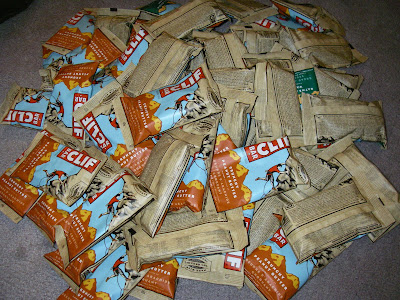
Do you think maybe I'll be sick of Clif bars by the time this trip is over? (I should count myself lucky...

)
I went out a bought myself an ultralight weight, one man tent. I'm going to field test it tonight in my living room
.
While using the chat function in skype to converse with our director in Haiti just now, our conversation was interrupted by him saying there was a tremor, and that he had to leave. I was in hindsight surprised he would even take the time to type that out before leaving.

But I haven't heard from him since, and assume he's ok, but who knows?

Thursday, January 21, 2010

Now, I am going to Haiti. The organization I work for Floresta, needs someone to help coordinate with other organizations for relief. Our staff there are mobilizing to work with communities in our project area to do road repair. They are also meeting with community leaders to formulate recovery plans.

I don't know how much internet connection I will have, but I will try to post something here as often as I am able.

Wednesday, January 13, 2010

I am in Canada, not in Haiti.

I just heard from our director there, and all of our staff are ok, thank God. As you have heard in the news, buildings have been destroyed, the communication system is down, and there have been many deaths.

Monday, December 14, 2009

How things work.

I think my recent experience in an unnamed airport lends some insight into how things work in the developing world. The airport will remain unidentified to protect, well, lets say the involved, since no-one in this story is innocent, including me.

I had arrived at said airport early, way early, and so had seen a couple of waves of passengers come and go, and one of the curious airport staff, the manager of a cafe/bar came over and started chatting. Later in the day, he mentioned that he could bring me some lunch if I wanted.
"There's chicken and fries, sandwich and fries, whatever you want." he said.
"How much is chicken and fries?" I inquired.
"Eleven dollars."
"Wow, kind of expensive, isn't it?" I replied
I should note that all of this is in the local language; an important factor which I'll elaborate on in a minute. Furthermore, I had seen he himself eating a plate of rice and beef just 5 minutes before, which I was guessing came from the airport staff kitchen. I was also guessing this was free for employees.
"What if I order rice and beef, like what you had?" I asked.
He chuckles, and then says."Rice and beef is 15 dollars."
"Fifteen?! Well, what about if I order just rice and sauce, no meat." I counter-offer.
"Maybe 3 dollars, No! 5 dollars." he says, with little hesitation.
"Come on," I say,"how about 4 dollars."
"Let me check with the cook." he responds.
I then thank him and retreat to my airport bench located slightly away from the cafe.
The cafe manager then carries on with his day, apparently not inquiring about my rice and sauce at all. I wait patiently and after about a half hour, he comes by my spot and tells me he is going to check with the cook now. Five minutes after this, he shows up with a steaming plate of rice and sauce; there's even a little meat in there, and hands it to me while informing me that the cook says 5 dollars. I nod and gratefully accept the plate.

Here's the thing. The food I got was tasty, 10 times better than the plastic wrapped sandwiches that are normally offered, and likely free to airport employees. I'm assuming that the cook probably did agree to 4 dollars, and the cafe manager with whom I negotiated, added an additional dollar for a 'handling fee'. And although I am paying for what is technically free food, I am paying one third of the official price if I had ordered something similar off the cafe menu. So everyone wins right? Not quite, I don't think. It seems like an ethical gray area, and one might argue that it's actually some subtle form of corruption.

Regardless, like I said in the beginning, it does provide some insight into how things work. One could probably try to analyze the haziness of the whole scenario, the non-linearity and randomness, and how what occurred was based more on the apparent established relationship between the cafe manager and myself, rather than any kind of menu, or marketing structure etc etc.

I wanted to come back briefly to the whole language thing. I am pretty sure that what occurred would have had a much lower chance of happening if I had been trying to make the transaction in English. In general I would say speaking English probably costs twice as much as speaking the local tongue, even just a very few words. For whatever reason, the majority of people respond to hearing a foreigner struggling to communicate in the local dialect. I mean, I don't try to learn language to save money, but it does seem to be a side benefit.

Sunday, December 13, 2009

Christmas

I think I just heard my first Christmas carols of the season being sung in Swahili by a group called Maimbo Pamoja, on a TV mounted in the lobby, next to the oscillating fan in the Muslim guesthouse, while waiting for my room receipt for 8000 Shillings. The guesthouse is in a dryland plain area in the town of Boma, about 15 minutes from the Kilimanjaro airport. For some reason, experiencing 'Gloria in excelsis Deo" completely cut off from all my normal cultural cues, without any fanfare or flourish, made it a moving moment for me. Now I begin my long journey home, including the not to be missed extended layover in the Nairobi airport, where I am beginning to recognize some of the employees and vice versa. Perhaps I will wish them a Merry Christmas.

Wednesday, September 02, 2009

I really think everyone should visit Tanzania. But then I think that about just about everywhere. So maybe the moral is that you should just go somewhere. Something amazing is sure to be there. My apologies for the lack of posts lately, and for the uninspired nature of this post. I'm hoping in the next couple of evenings, while spare time and good internet connection coincide, to put something down on paper. Here is the view of the garden in late evening light from where I send this message to you.

Thursday, April 23, 2009

Translation Requested

I am looking for someone who is willing to translate Chinese to English. At least this page. There is an entire 48 page manual which needs translating, but who has that kind of time? If someone is interested, I can guess at the critical pages and send them to you. 

This is the operating manual for the microhydro unit that I mentioned in a previous blog entry. It clearly has application for a lot of the places that I visit.