Sunday, September 13, 2015

The Killarney hike while tiring, was rejuvenating. I think all that scrambling up and down hills and sweating somehow purged my system.  In my mind it seems like a good idea to do that kind of walking more often but good intentions....

Right now I'm actually looking forward to just sitting inert on the plane for a few hours.
Travel notes:
My doorstep to airport on public transit = 2 hours 10 minutes
Airport entrance to gate = 17 minutes 1 second
Made it to Silver Peak and back. Many hikers do this trail, so not such a great feat I suppose, but for me it was hard and I'm tired. But I feel good, even rejuvenated. This is Proulx Lake, and this is really the colour of the water. And the water here is about 5 or 6 metres deep looking almost straight down. Next stop, Sarajevo. 

Sunday, September 06, 2015

The good news is that we'very been able to book some of the best campsites on the Silver Peak trail because other hikers have beenough cancelling out in the past few days. The bad news is that other hikers have been cancelling out because rain is forecast for most of this week. Forecast keeps changing though so I'm optimistic about not hiking soaking wet every day.

Sunday, August 30, 2015

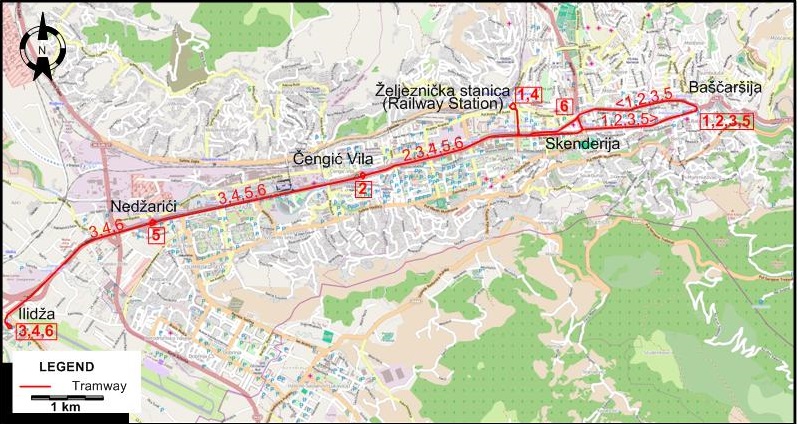
Got some vacation lined up (yea!). Hiking to Silver Peak in Killarney Provincial Park followed immediately by bus-train-walking in Eastern Europe. Yes, for some reason this year, I've managed to end up with trips booked back to back. Perhaps subconsciously I've succumbed to the 'adrenaline junkie' travel method--barely leave yourself enough time between trips to unpack and repack just to test your endurance. Whatever the explanation, I've got these piles of stuff started in my living room, one for hiking, and one for Europe. This I tell myself, is helping me prepare for both trips at the same time. Also I'm trying to accumulate a sufficient body of knowledge about E. Europe to allow me to navigate successfully. Below for example is a map of the tram line in Sarajevo, which I hope to use to get from the airport to the city centre. In fact, the tram line does not connect to the airport, so I will have to take a bus (I think) from airport to tram line. This also has become one of my things: taking on the public transit system instead taxis. Also part of the adrenaline agenda it would seem.

Monday, August 03, 2015

The Kakumba watershed in the 'winter', or perhaps more appropriately, in the dry season. Farmers burn their fields for a variety of reasons most of which are actually pretty reasonable, but the end result is greater erosion, declining soil health, and ultimately a loss of ability to feed one's family. The challenge of reversing the community habit of burning fields is a great one, as our project manager is Congo is contemplating.

Saturday, August 01, 2015

Yesterday, I saw monkeys! Seeing monkeys in and of itself is not that big a deal, but it is the first time I've ever seen monkeys at one of our project sites. Most of the places where I work are, let's say, very agricultural, and there's not that much room for wildlife. But the Congo basin, as I've probably mentioned before is the site of the second largest rainforest in the world and even in the farm communities where we are (just beginning) to work, there are still pockets of forest left. It is one of our hopes that, together with farmers in the area, we can intervene to not only help people protect their precious farmland, but also to help them protect the wild areas that still remain nearby. This is in a sense the notion of preventative medicine versus curative medicine. Or dealing with the problem early instead of waiting til things have gone way too far.

And just so you don't think that there are monkeys just falling out of trees everywhere here, you should know that in order to see these ones, we started hiking around 7 am and reached the spot in the photo around 8:30 so, hiking over what I would say is pretty rugged terrain.

It's true that this photo looks a lot like a picture of a bunch of trees, but I swear to you that there are monkeys. Had I taken video, you would see the branches moving around as they jumped from tree to tree.

Sunday, July 26, 2015

This morning about 3:30 am I woke up to the sound of a loud argument between a man and a woman. The argument went on in several languages, including occasionally in English, I guess because both of them wanted the entire world hear their side. What I heard in English was the woman screaming,"Give me my money!", and the man saying,"Get out!". I also heard snippets in French that sounded like, "Shut your mouth", and "I don't want to talk to you". The whole thing went on for nearly an hour. Fortunately for me, I had to get up early anyway to get ready for this bus trip. So just a few minutes ago, while I was waiting in the lobby for my ride, I saw a middle aged man leave with his luggage in a large SUV, and a few minutes later a young woman leaving with no luggage. 
Mind you, counting travel hours that way is a bit misleading since the 40-60 hours includes about 7 hours at a hotel. Which is where I am right now, with internet connection, a working shower, and drinking cold water supposedly bottled from the 'Source of the Nile' (in fact on the bottle label, 'Source of the Nile' is actually in quotes).

Kigali is in fact in the Nile watershed, and somewhat close to the source, so I suppose a water bottling company could make that argument. In any case, the bus that I get on tomorrow morning, will wind its way through the mountains towards the border, and at somewhere in Nyungwe National Park will cross over from the Nile to the Congo watershed. Interesting thing about Rwanda and Burundi, that both countries sit atop the divide between two of the most important watersheds in Africa. One wonders how that geography is linked to the history of this part of the world.
13 minutes 6 seconds, airport entrance to departure gate. Pearson airport, terminal 3.

Today I head  back to Congo. Just got back this morning from a GIS conference, which was great, and this afternoon I'm at the airport again. So I don't know how to count my journey. When does one trip end and the next begin? And yes, I do mean that in both the existential sense as well as the time keeping sense. Numbers-wise it doesn't make that much difference. If I count from now til I reach my real destination in Congo, it's about a 45 hour trip. If I count since I left the conference last night til I reach Congo it's probably more like a 60 hour trip. This is totally OK, because I got to go to an excellent conference where I learned a tonne, and now I get to visit a really beautiful part of the planet which is the Congo Basin. Everyone should do it.

Thursday, June 25, 2015

Me and the Rwandan flag. One more country to add to the count.

Not much blogging (actually none) on this trip although there was plenty to blog about. Among other things, the scenic bus tour through Rwanda and eastern Congo turned out to be an intense and grueling journey, definitely a test of one's stamina. Not totally unexpected, but there were a couple or three moments when arrival at the destination was not at all certain. I also witnessed a new record for number of people on a minivan, 31. No, I'm not kidding and for comparison, the previous record (as witnessed by me) was 29. That leg of the journey featured a bench seat where all of the padding had worn off, so I was basically sitting on the pipe frame that would normally hold up the padding, and the board that had replaced the padding on the back had a nail sticking out of it and occasionally into my back. 

Sunday, June 14, 2015

Things I am looking forward to on this trip:
  • adding a new country to my checklist
  • a scenic bus tour through Rwanda and Eastern Congo
  • the possibility of being witness to the launching of a new program for our organization--please note this is not a slam dunk, so many things could push back, postpone, undermine, derail, or otherwise frustrate this process. All the usual philosophical cliche's apply: Murphy's law, 'nothing is ever  as easy as it seems', 'that that don't kill me, can only make me stronger', Ok, that last one is a bit of a stretch, fueled by the double espresso I just ordered and my inability to sleep on airplanes. In fact at this point I'm barely ahead of the proverbial army of monkeys randomly typing at keyboards. I mean this is a bullet point that has apparently turned into a rambling paragraph, hardly making a point at all, bullet or otherwise. Can't wait to get to a bed somewhere and sleep. That is still 14-16 hours away I expect.
Schipol, from gate arrival through security check to reaching my departure gate, 15 minutes. Sorry, wasn't alert enough to set my stop watch. I realize that almost no one cares about the time it takes to process me through airports, but I figure that someone out there is mining data on traveler perception of airports, and this is my contribution. Plus it amuses me in an environment otherwise largely devoid of amusement--unless you consider duty-free shopping to be a form of amusement. Also I have a theory that some airports are better at this than others and eventually I hope to collect enough data to prove it, at least to myself.


Saturday, June 13, 2015

This trip will have the added feature of taking a bus basically all the way around Burundi to avoid possible political things. Actually it will be one bus for about 5 hours followed by a public, shared taxi for another 3 hours. So including transfer times, border crossings, etc it should be a 9 or 10 hour trip. Should be very scenic.
30 minutes from entrance to gate, Toronto Pearson airport.


Thursday, May 28, 2015

This is one of the first microwatershed projects that Floresta Haiti ever did. I think about 2005 or 2006 so it's just slightly over 10 years old. Good to see that the trees are still there. The darkish green trees in the centre and left of the photo are 'frenn' (Simarouba glauca) which is a species native to Haiti. The lighter green trees on the right of the photo and further up the slope are eucalyptus (not native). 

One of many beautiful waterfalls on our hike to install water quality monitoring equipment. Tough job, but somebody has to do it.

Sunday, May 24, 2015

Airport time from entrance to gate, 22 minutes. Minor delay because I couldn't use the ticket kiosk for some reason. Otherwise a good morning so far. This trip to Haiti to work on a new (and hopefully improved) way to handle data, and a new way of monitoring water quality. This in particular I am pretty excited about. A battery operated data logger that will automatically collect information on water depth and water temperature. There are several practical issues to sort out like how to protect such a device from cows and children, but we are working on that, and the possibility of getting some really valuable data back makes it worth the effort. We shall see. I'll let you know how it goes this week.

Thursday, April 09, 2015

See, this is the thing: I can be sitting here on this pretty beach, in the cool shade, enjoying a cold beverage, looking at the beautiful mountains across the shimmering lake, and just 15 minutes down the road, this fragile political situation may or may not be unfolding. It's a contradiction of the highest order.

The other day a colleague of mine was explaining how he was trapped for 4 days in a guesthouse in a capital city with nothing but the bottles of juice and bread that he had somewhat on a whim purchased the night before. Well the next four days was serious city-wide rioting so intense that guesthouse staff wouldn't even cross the road to come to the guesthouse. So there my colleague was, all alone, rationing his juice and bread. At the end of this story, he sighs and says, "Ah, Africa", conveying in one succinct phrase a deep and passionate love, and at the same time an equally passionate frustration.

While I am not much more than a glorified tourist, I have some sense of what my colleague was expressing. This place can make one profoundly happy, and at the same time drive one mind numbingly crazy.
The good news it seems to me, is that people seem pretty willing to talk about the political situation. And fairly open about complaining about the government. That's got to be a good indicator doesn't it? Isn't that what we do in democracies, complain? 

Wednesday, April 08, 2015

Day 5 of 8: There's something very sad about the fact that I am in Africa this week and so far I've talked more about my luggage than anything else. This may be a bad sign, I'm not sure.

On the other hand, I'm really don't know what else to talk about. Talk about work would go mostly like this:
'Had some meetings. Talked about some stuff. Agreed on some stuff. Set dates to do some stuff. Talked about more stuff."

I can barely think about writing about that, let alone imagining that someone wants to read about it.

Of course the really big topic is politics here in Burundi. Things are very tense right now with elections beginning next month (ish). But I don't feel like I can talk about that either for a couple of reasons. One, much of what I know is based on rumour and speculation. I just don't think I have any business posting that. Two, the more official news you can easily find by doing some responsible internet research yourself. I would warn you though that you will likely discover articles that say everything is great, everything is fine. Myself, I am not qualified to comment on the validity of such claims, but recommend that if you find articles like that, you keep looking for other articles with a different perspective.

I will venture to say that it feels very much like things are on a hair-trigger. For a myriad of reasons, social, historical, cultural, political, economic, even environmental, there is potential for the situation to take a turn for the worse very quickly and without much warning. So, an entire nation holds their breath, waiting and hoping. Like the Scout motto I suppose--I think it's a Scout motto--"Hope for the best but prepare for the worst". If you're the praying type, now would be a very good time to do so. If you're not the praying type, well, think positive thoughts or something. It is not an exaggeration to say that what happens in the next couple of months could be the difference between a nation with a promising future, or a terrible tragedy.

Sunday, April 05, 2015

End of day 1. Flight was good, no delays, and about 20 hours which is probably the fastest I've ever made it to Bujumbura. Somebody met me at the airport to pick me up. My hotel room is clean. The electricity works. There's hot water. No rioting in the streets. Yup overall a good day.

Saturday, April 04, 2015

29 minutes 10 seconds from entrance to gate. YYZ. Slower than usual because I had to actually talk to a ticketing agent rather than using a machine. Which was more pleasant than using a machine anyways, I have no complaints about the service. Just that it's drawing down my average check in time.

This is day 1 of 8. Easy trip. At least logistics wise. I expect within that 8 days there will be about 4
fairly complicated hours and the rest should be the proverbial walk in the park.

I'm trying a new luggage configuration--yes, I'm sitting in an airport and there's not a whole lot to do, so I'm blogging about my luggage. This is a 15 litre rolling briefcase and an 18 litre backpack. This is about a 45% volume reduction compared to the other system I use. Plenty of room for one week I think. And I've finally caved in and got rolling luggage. I knew this day was inevitable, but sadly it is here. Sad because I'm giving in to gravity. Resistance is futile I guess, but all these years I've felt compelled to actually carry my stuff rather than roll it.

Thursday, February 19, 2015

Day 37 of 38. On the road again. About 30 hours from now I should be home if all goes well. Never assume that though. It's been a good trip--not without its stressful moments and I'm exhausted but we got almost everything done that we set out to do. This morning was the first day in about 35 days that I just lay about, appreciating the ability to lie horizontally: something I won't be able to do for the next 30 hours. 
Seems to me Burundians are pretty happy today. There is really not much point in me trying to explain here. All you have to do is check any news links at all on Burundi today, such as this one: http://www.hrw.org/news/2015/02/18/burundi-journalist-be-freed-bail

It is pretty much all anyone is talking about. My unsolicited and outsider commentary is that a victory has been won for democracy here. I think you can see it in people's faces.

Sunday, February 15, 2015

Wait, was I just complaining about how juicy that mango was? Here I am enjoying this great breakfast of freshly brewed local coffee, crusty baguette, eggs, and an amazing, perfectly ripe mango, and I'm focused on the little bit of juice running down my fingers. Yeah, sometimes I catch myself being ridiculous. What I worry about is all the other times I don't notice myself being ridiculous. Absurdity, I suppose, is just part of the human condition. We try to cover, with nice clothes, polite language, decent haircuts...well, I cut my own hair, so I don't even have that. Which by the way did I mention I need a haircut? Yup, day 34 of 38 I definitely need a haircut. And it turns out I didn't count the extra day of flying to get home, which means trip is actually 39 days. I should have made it 40 days just to be in solidarity with Noah and company. I wonder if Noah thought to bring mango on that boat.

Thursday, February 12, 2015

Day 30 of 38: So far everything is holding up. I actually have a surplus of clean socks. I just had to charge my e-reader yesterday for the first time. And my electric water flosser is still working on one battery charge (amazing--but I'm expecting it to give out any day). I've change hotels at least 7 times. I haven't seen a gorilla though. And most likely will not. Those are so far upstream that it may be a while before I even get to a location where I could see one. And, truth be told, I've only spent about a third of my time actually in Congo. The rest has been spent in Bujumbura (Burundi) working on analysis and planning stuff. So even those two thirds of the time, I've been thinking about Congo--pretty much completely immersed in it (or is that submerged?). When I get home I think I'll take a day off. And I need a haircut.

Wednesday, February 11, 2015

If you look very closely at the footpath in the middle of the photo, near the the ridgeline, you will see 4 or 5 farmers plodding their way up to the top. This is the daily routine if farming is your occupation here. Walk these trails, get to your field where you do the actual work you came to do, and if you harvest any firewood, or crops, carry those back on this same trail  In fact the farmers you see here are making their way home in the late afternoon. When they get home they will then have to cook dinner for their family. Exhausting. I just had a look at some research that showed that women in these communities work on average 15 hours per day. 

Tuesday, February 03, 2015

Congo reminds me of a river. Which is probably not the greatest metaphor since Congo is also actually a river. But I mean the country. Not that I am really in any way qualified to talk about what Congo is or isn't. Nevertheless, I know that rivers are never what they seem. There are currents and eddies, and it flows at different speeds, around rocks, at the edges, in the middle. If one navigates a river, one should be on constant watch, reading the currents, scanning for hidden rocks, maneuvering for the best, safest route. A river can be calm and beautiful, but just around the next turn it can be a raging torrent, terrifying and deadly. A river can pull you under and snatch your life in a second, or it can sustain you, quench your thirst, soothe your soul.


If you look at the bottom of this hill (mountain?) in the middle of the photo, you will see a line of trees, about 12 or 13 of them, all evenly spaced in a line. This is a native tree species known locally as kavungwe, a.k.a. Khaya anthotheca, a.k.a. African mahogany. What is exciting to me about this, is that first, farmers are cultivating this tree deliberately in their farm fields which means there is some potential for promoting more agroforestry in the area. Second, these trees were not planted. Kavungwe grows up naturally everywhere, and farmers choose to let it grow where they like. This is essentially a system that agricultural development practitioners have named FMNR (Farmer managed natural regeneration). One of the big advantages of FMNR is that it is considerably less costly and labour intensive than tree planting. So having the option of being able to promote FMNR, a system which some farmers here are already practicing traditionally, means there is the possibility of transforming a large area like this with little cost.

Please don't get the idea that I think this is a "problem-solved" scenario. There are plenty of challenges to confront before a hillside like this could change. But at least the seed of an idea is already there.


Saturday, January 31, 2015

Day 18 or 38: The view from my hotel. Of those 18 days 1.5 were spent on the plane, and 5 have been spent in Congo. Widespread protests delayed the ability to enter the country, and those same protests inspired the government to shut down the internet and some mobile phone services (texting). I understand there was fear of opposition groups organizing more protests. This greatly inhibited my ability to work so I have been spending more time in Bujumbura than anticipated. But at least I can see the mountains of Congo...


The opening line of the movie The Quiet American says, "They say you come to Vietnam and understand a lot in a few minutes. The rest has got to be lived." The photo below, or at least the way I was feeling when I took the photo below is summed up by that line (except of course, replace 'Vietnam' with 'Congo'). 

I have to go backward a few steps to explain. Many months ago, actually a couple of years ago, we initiated a study of Congo to consider if we could set up a project there, and if so, where would be the best place to do that. We pulled together information from a wide variety of sources, looking at poverty rates, deforestation, ease of access, etc. This data crunching led us to a particular watershed that begins on the cusp of the Itombwe Plateau, a well recognized biodiversity hotspot, and feeds Lake Tanganyika, the second largest freshwater lake in the world. It seemed to have all the right conditions that would fit our priorities as an organization. We even had some trusted contacts in the area visit the site and do an early assessment. In spite of all these positive signs, there were still unanswered questions. 

Among those questions: would the watershed we had identified be a logical working unit, easily enough understood to be the geographic boundaries for any activities? Well it only took one look at those mountain ridges, on the hike I mentioned yesterday, to see how clearly the basin is defined as I think you can see in the photo below. 

Understanding in a very few minutes. The living, will be daunting.


Friday, January 30, 2015

We hiked part way up the Kakumba River valley yesterday. We were promised by a local leader that this hike would take us about an hour and a half. Three and a half hours later we were still about 200 metres short of our destination. Two hundred metres of what seemed to me at the time like steep climbing and would have taken me a good half hour. So we (or more accurately I) decided we should turn around and head back down. This decision was made partly out of exhaustion and partly out of concern about getting back to town in time that same night. A good decision I think although hurtful to my pride. I take some consolation in the fact that I wasn't the slowest, and several people were tired besides myself. I consider myself to be in reasonable shape, but see below a couple of the dozens of farmers who passed us on the trail walking with ease even with what I would consider excruciatingly heavy loads borne in highly non-ergonomic 'back-packs'.


Sunday, January 25, 2015

This is the Kambekulu river, one of the potential watersheds for a new project. If you study this picture for a while, a few things become apparent:
-people are farming on the very steep hillsides in the background
-there are very steep hillsides in the background

This area has quite intense geography and there are no roads back into those hills where we are thinking about working. This has both a plus and a minus, the plus being that inaccessibility has probably slowed the rate of deforestation (although deforestation is still taking place) and the minus being how difficult it will be for a project to effectively reach people. 

Saturday, January 24, 2015

The forest that you see on these hilltops are right next to the main road that runs along side Lake Tanganyika. This forest also has monkeys, and some years ago used to have chimpanzees and gorillas. Gorillas even used to be known to walk right out on the road in the past. Not anymore as the primary forest has been cut and as hunting has reduced the gorilla population. Primates are actually a major problem for farmers since they eat the crops when they are ripe. As a result, part of farming is standing guard by fields as the harvest ripens. This also presents a very interesting challenge for a project that wants to help farmers feed their families while at the same time protecting wildlife.

Tuesday, January 20, 2015

Day 7 of 38
Well, we were supposed to cross the border today and begin meetings with local leaders. Instead today was a day of protests against corruption in leadership so all offices and places of work were closed. Protests in other towns such as Goma and Kinshasa against perceived irregularities for upcoming elections got violent. So instead we stayed put and spent the day in a peaceful and beautifully manicured hotel garden drinking espresso and planning project objectives. 

Monday, January 19, 2015

I have to confess that I was not thrilled about travelling for 38 days. I mean I've done trips much longer but these days most of my trips are 7-10 days. So 38 just seems like a lot. However it is allowing me to function at a much more relaxed pace. On a shorter trip I am counting every minute and feeling a constant pressure to get stuff done. A longer trip let's me run at a pace more like the local rhythm which is much more pleasant.  Don't get me wrong, there is still a ton of things to get done but it all seems manageable. Maybe you should ask me again on day 32, maybe I won't feel so calm about it... 
Day 6 of 38:
Luggage is still holding up. In fact since my arrival coincided with a weekend, I was able to avoid dipping into my supply of 'office' clothing, which puts me slightly ahead of my laundry schedule.

Bujumbura, still only in Bujumbura. Visa application today (hopefully), some baseline study prep, and if everything goes well. we leave tomorrow morning. In the meantime I've been--only partially guiltily--enjoying very pleasant montane tropic winter temperatures (mid 20's C), and freshly cut fruits at the hotel complimentary breakfast.

Friday, January 16, 2015

Things around here seem really calm and peaceful. Too peaceful? I have really limited ability to interpret how things look to me on the street compared to what may be going on behind the scenes. or what may be about to happen. I went for a walk today to run a few errands and just to start flushing out the jet lag. I didn't feel particularly unsafe. Not anymore than usual anyway. And I bought a local phone card which allows internet connection. I'd say it's as good as my connect back home. 

Thursday, January 15, 2015

A nice feature which separates great airports is these small luggage carts. Easy to maneuver in crowds, lineups,  bathrooms etc. Unlike those monster carts I see elsewhere. This is especially useful if you're going to be in the airport for a while rather than having to lug luggage. Also available for free. I'm just saying, big airports....

It has been a long time since I had a major flight delay. By major I mean that my arrival time at my final destination has to get pushed back. In this case, I'll be arriving at 9 in the morning instead of 1:30 in the morning, which although later, is a much more civilized hour.  This particular delay happened to be on KLM, but they handled it pretty well, had my new boarding passes ready on my arrival in Amsterdam, and gave me a meal voucher (10 euros). All in all not a terrible experience. The worst part I guess was having to sit in the airplane for an extra 4 hours. Like I always say, it's a continuous miracle to me that a huge chunk of metal like that can get in the air at all and then come back down to earth again.

The time before when I had a major delay was probably 3 or so years ago. That one was Air Canada. The time before that was Emirates. These are all good airlines as far as I can tell. I see no discernible pattern as far as delays are concerned. And I would say that 95% of the time or more, my travel is trouble free.

Anyhow, now I've got a few hours to kill in Schiphol.

Wednesday, January 14, 2015

I may be trying to do something inadvisable; trying to fit a 38 day trip into carry on luggage. There is probably not even a really great reason for me to do that except my fanaticism about no checked luggage. This is further complicated by the fact that at my destination, it may not be easy to get laundry done. Also if at any point, a luggage inspection is required this will be problematic as there will be clothes everywhere. Every piece of clothing is packed tight and ready to spring once an opening is provided. I may have in this case, tried to fly too close to the sun.

Sunday, November 09, 2014

Baseball in the Dominican Republic. Tigres de Licey vs Estrellas for those who might know. For those who don't, baseball is huge in the DR and this league is just starting now. Soon--and even in this game--players from the Major Leagues are slowly migrating back to play and the quality of ball steadily increases from now till the end of November. While this game was well attended, by the end of the month it will be packed. And not only Dominicans play in this league, I noticed that several of the pitchers were Americans.It also had most of the trappings of an MLB game, pizza and beer vendors, a mascot in a large furry costume, cheerleaders gyrating to regeton--OK, that last part seemed like a distinctly local flourish.

Wednesday, November 05, 2014

When I said I was going somewhere warmer, I definitely did not mean the commuter flight I was just on where it was like sitting in a meat locker for an hour and a half. Somehow temperature control in airplane cabins seems to be kind of a thing. Makes sense I guess; a thin metal shell thousands of metres up in the atmosphere. But now, really I am going somewhere warm. Leaving New York and heading for the Caribbean. 
Worst check in time ever: 37 minutes 24 seconds.  This due to some parts and tools I am carrying which made for an extra careful security check, plus my gate number was incorrect which resulted in some wandering and staring at flight info screens. I am headed somewhere warm though so no complaints.

Saturday, August 09, 2014

Made it. 23 hours 42 minutes. This is from door to door so includes a few hours travel time to and from airports. So actual time on planes was much less. Overall a fairly painless journey. On arrival, the kid sitting beside me maybe 11 or 12, was so fast asleep that even when his younger sister was pushing on his nose he still didn't wake up. Oh that we could all sleep so soundly on the plane.

Friday, August 08, 2014

This is classic Chagga agroforestry, otherwise known as the homegarden. I've probably talked about this before. The grass in the foreground is cut for feed for goats and cows. You can also see yet another one of those planted trees popping up in the open gap in the grass. There are other small seedlings just like this to the left and right of photo and all along this hedge. In the background you can clearly see the multi-level nature of the garden, some very tall trees, and a middle layer of smaller trees, a lower layer of shrub like trees (coffee in this case), and then some smaller plants at ground level. The idea is that everything is working together, making the best use of light and space at all levels. Underground as well, the picture would be similar if we could see the rooting zones of the various plants. They would also be making good use of the moisture and nutrients available by drawing from different depths in the soil. This system in a sense is trying to mimic nature. Not a perfect mimicry though, since many of the species you see are actually not native. The top level, the acacias and other large trees are most likely native. And the grass is native. However, a lot of the other species have been introduced at some point. Coffee came from Ethiopia hundreds of years ago. Avocado as well, and the wild cassava trees you see in the middle were also probably introduced by Portuguese traders 500 or more years ago. Banana is also not native, although apparently archaeological evidence indicates that it may have been here for 1000's of years. I would say that probably about one third of the species  you  see in this photo are native,  and the remaining 2/3's while mostly naturalized and viewed by many as local plants, are strictly speaking from far-flung foreign lands.


Thursday, August 07, 2014

Finally photos as promised. Only 3 days late. This first shot shows several lines of trees planted on a hillside. The slightly older (maybe 4-8 years old) trees in the foreground are obvious, but if you look about 3-4 metres down the slope you will see another line of smaller trees that are maybe 2-3 years old. And you'll have to take my word for it, or try to zoom in really close, but there is another line of new seedlings another 3-4 metres down the slope that appear to have been planted this year. Like I said in my post earlier this week, these are discoveries I made just walking around on my own. I don't know for certain who planted them or why, but I found examples like this pretty much everywhere I went. So whether we, as an organiztion, get credit or not is not really the point. Either way lots of trees are getting planted.

This is Calliandra. In this case the family has planted it along the edge of their property, and are chopping it regularly at ground level so it is growing like a hedge. This is serving (probably) at least 4 functions, which include marking the edge of the property, creating a barrier against soil erosion, providing fodder for livestock (calliandra is high in protein), and providing firewood for the family (ideal for cooking). Some people would say, "well calliandra is not native to east Africa so it is threatening the ecosystem". I would say it may be doing the opposite. By allowing families to collect firewood from their own backyard, it reduces the need to send wives or children far into the forest, where they will be most likely cutting down native species.

Tuesday, August 05, 2014

OK. I didn't get a chance to upload photos. Sorry, long day. And, well, they're not all that exciting anyway. But I promise to do them tomorrow. 

Monday, August 04, 2014

I went out with the evaluation surveyors today and had a chance to walk around a bit while interviews were going on. I noticed a house where someone was using the double dug technique to produce vegetables although this person is not actively participating in the program. I also noticed that there are small trees everywhere at least in this particular community. You have to understand that this was me just wandering around on my own. No one was showing me their special project. But on my own I could find planted trees everywhere. Now, because I was on my own I couldn't confirm whether any particular tree had anything to do with our program or not but I don't think that really matters much to me. Tonnes of trees are getting planted either way. Tomorrow I'll try to upload some pictures if I can.

Which by the way, I realized tonight that I have had internet and a hot shower every single day of this trip so far. It almost doesn't seem right. I think I'm actually nostalgic for the days when travel to the developing world meant sharpening your survival skills and being resourceful about basic necessities.  I know there are still lots of places like that but I think you have to go further and further afield to find them.

Sunday, August 03, 2014

Now we start the process all over again this time in Tanzania. This will be the 5th time in 2 months I've explained how the specific definition of household works for this particular survey and how surveyors need to double check that they've asked people about all 6 food categories (in spite of repeated reminders inevitably someone forgets to fill in one of the food categories).  If I sound like I'm getting a bit tired of evaluation,  yeah maybe. I'll try my best to stay positive I guess.

Actually I'm expecting things to go pretty well here. This is based on the fact that it went well here last time (2011) and the communication I've had with staff here prior to my arrival have had all the signs of good preparation.  Things can always not go as planned of course but I'm actually pretty relaxed going into this week.  I realized that on the drive from the airport tonight when I was mostly just sitting back and enjoying the music that the driver was playing (a local style called Bongo Flava) and not really thinking much at all about work. A local Kenyan song by the way says "big up Obama". Not that that has anything to do with anything but I just found it amusing. 
My last day in Burundi. We managed to get 200 of 320 surveys done and entered in the database which is pretty good.  The rest will be finished in the next few days. At the beginning of the week I really thought we would do much less. And data quality appears pretty good so far. Won't really know til we start analysis.

By the way,  for those who have been following news, just want to let you know that my chances of getting Ebola are almost exactly zero. That is happening way on the other side of the continent. Do you know how big Africa is? Admittedly the medical community doesn't really know much about the disease, but chances are low.

Thursday, July 31, 2014

So now we're doing evaluation in Burundi. Based on the data I've entered so far (about 20 percent of surveys), my impression is that the sample of people we are interviewing is going to be the youngest of all the places we are surveying. Which makes sense when you go to a village and see tonnes of kids running around and lots of young adults. I suppose I could look up and see what the stats are on average lifespan etc, or you could, but either way I know it's overall a young country, demographic wise.

Tuesday, July 29, 2014

Final tally on trip duration was 29 hours 28 minutes. This is from arrival at first airport to arrival at destination hotel early Monday morning. Sorry for not updating sooner, but it's been kind of busy with prepping for the evaluation here. Not getting enough sleep caught up to me today though and I fell asleep in the truck in a village while surveyors were out collecting data. One can only go so long on determination alone.

Sunday, July 27, 2014

I'm now at 22  hours 46 minutes and counting. Fortunately I nap on the plane so there is some relief in little spontaneous bits. Still one more flight to go. I think I'll stop the clock when I arrive at hotel

Saturday, July 26, 2014

The guy at security check told me I was the second person today with a "very, very, long day". Which I found amusing and strangely encouraging somehow.  So  I've decided to set my stopwatch and see exactly how long. Hopefully on the other end I remember to hit stop. So far the day has been 28 minutes and 43 seconds.

Friday, July 11, 2014

And it's done. Here's all the surveys for the DR completed and recorded. Now the analysis begins. And we only have to repeat this same process 5 more times in 5 more countries. Beginning next week in Haiti.


Tuesday, July 08, 2014

On the hill in the background you can see some bare fields and a small forest in the middle. That small forest is a shade-grown coffee farm. It is far less vulnerable to erosion than the field on the left which is showing bare rocks. The trees help produce better quality coffee, protect the soil and also add nutrients which actually improve the soil.  From a distance you can see that it looks like a natural forest. The local organization here, Floresta, is helping farmers  to improve  these coffee plantings by  providing them with better quality coffee  seedlings which can  produce more  and are resistant to disease.

Saturday, July 05, 2014

This is what Canadian companies do. The first photo shows a mining operation in the DR. If you look closely at the mountain tops especially on the right you can see the removal operation. For comparison I've added a shot of mountains in a national park


Thursday, July 03, 2014

Here's what we were doing today:
That is discussing with farmers the biggest changes in their communities over the past few years. The top one is that people are being more conscientious about saving money. This is having a lot of positive effects as listed in the photo. The table you see in the photo is the input provided by the focus group consisting of farmers and community leaders. Well, the majority present were mostly farmers who also happened to be community leaders. Or maybe leaders who also happened to be farmers.

Tuesday, July 01, 2014

This afternoon we had some very animated conversations about this graph. Which was very exciting for me. Normally I expect people to be at the very most underwhelmed by charts and graphs. But this information really meant something to everyone around the table today and it was fun to be a part. Without explanation I'm not sure if you can get much out of this, but maybe take a shot at your own interpretation. Maybe in another post I can explain.