Friday, April 28, 2006

 Posted by Picasa

Sunday, April 16, 2006

v3#4

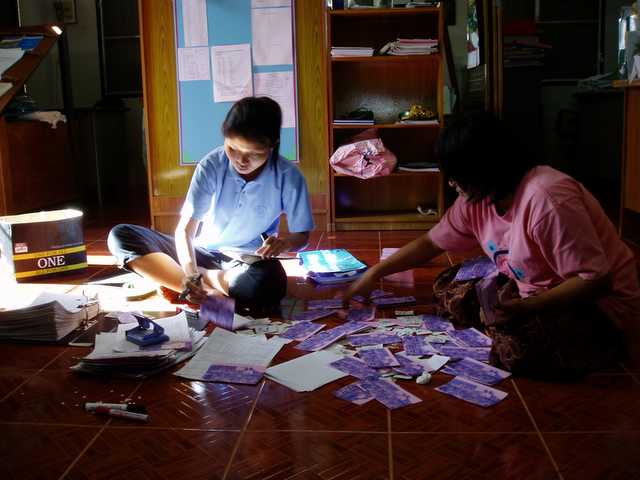
Sometimes I write this thing as much for my own benefit as anyone else´s. Where exactly am I? Oh yeah, the Dominican Republic. I got here this afternoon on a two prop island hopper from Haiti. My five weeks in Haiti were a bit of everything. The Haitian staff and myself spent several days in the border community of Terre Froide (18.37904N, 71.82652W) conducting what is called a Participatory Rural Appraisal (PRA). A PRA is basically a series of exercises which an organization conducts in order to better understand the community where they intend to work, and more importantly--as the name suggests--to allow the community to participate in the planning process for a new program which might be coming to their area. This particular PRA lasted two days, and resulted in a list of the most significant problems in the community as well as proposed solutions for each problem. All of this work is basically done by the community members, and our job as an organization is basically to listen.

Lots more happened in the past 5 weeks than the PRA, and maybe if I´m feeling energetic at some point I will post some stuff on the blog. Right now I´m pretty much exhausted, and need to get rested up, because we are going to repeat the whole process on the Dominican side of the border starting tomorrow morning!

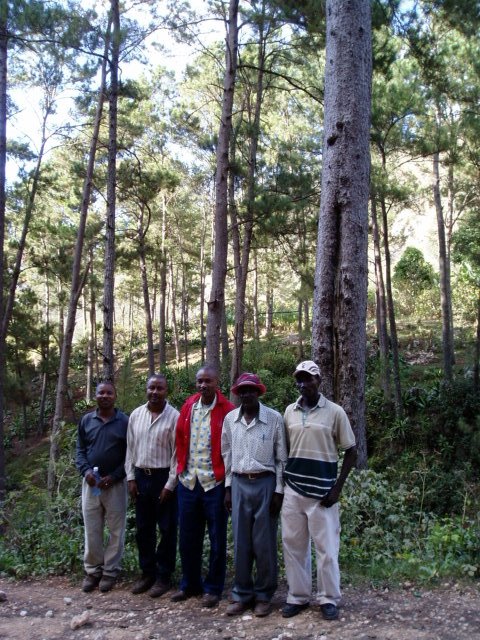
Photo: a group of farmers representing 3 of the 12 communities attending the PRA, discuss the major problems in their particular areas.

Sunday, March 05, 2006

Photos from Haitian/Dominican border

Border town on Haitian side, as viewed from it sister town in the DR


Market day in the same town


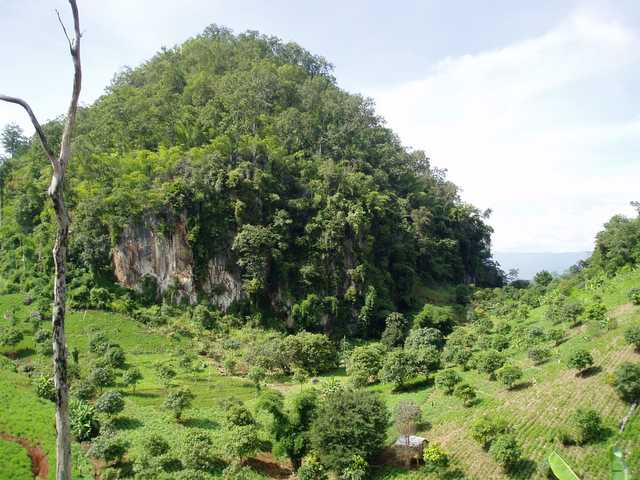
Looking up towards the neighbouring national park in the DR, protected but under heavy pressure from the surrounding communities


Looking back down towards Jimani, the town which was flooded out in 2004. Note the large alluvial fan, caused by the flooding, which starts in communities far upstream


Down in Jimani, standing on the alluvial fan, looking at the new barrier being build in preparation for the next flooding event.

Saturday, March 04, 2006

v3#3

18.475550° N 69.964880°W for those of you with Google Earth, or some other mapping software. I've been in the Dominican Republic for about 3 weeks. My time has focussed mostly on working with the staff here to develop our plans for the project in the border area between the DR and Haiti. This included a visit to the border to visit some communities and talk to some of the local leadership. Next week I am going to Haiti (hopefully) to do the same with our Haitian staff. (Since the election of Rene Preval as President, the situation there seems to have calmed down somewhat.) The border area is fascinating and complicated, and I think unique. It doesn't seem to be as much of a line as a wide band with open economic and social interchange between Dominicans and Haitians, and a gradual blending of cultures across the artificial marks drawn on maps. Many people on both sides (within this band) speak both Spanish and Haitian Creole, and there is a lot of intermarriage. Agriculture in the zone is also dependent on a close intertwining of the two cultures, with many Haitians share cropping on Dominican owned land. Understanding this relationship is going to be critical to our developing initiatives that will be appropriate for the region. At an organizational level, we will also be working together more closely as Haitians, Dominicans, and North Americans. This will be another big challenge, but our initial meetings of Floresta-Haiti, Floresta-DR, and Floresta-USA, have been very positive, and even in these planning stages, we are learning from each other. This is no small thing, considering the general feelings of hostility and discrimination that exist between the two cultures, and have existed for centuries.

Bob


Photo: Haitian girl on her way to market in a border town on the Haitian side, where goods are informally traded back and forth across international lines

Tuesday, February 14, 2006

v3#2

On Wednesday, Feb. 15, I leave for the Dominican Republic. I will be gone for 2.5 months, and will mainly be involved in helping to start a new Floresta project on the border between Haiti and the Dominican Republic. As you may know, the island of Hispanola is occupied by the two countries, Haiti on the western third, and the DR on the eastern two thirds. The entire island is about 650km x 250km making it slightly larger than Lake Superior. Sharing the same island has meant a deeply intertwined but not necessarily friendly history and today you could probably liken the relationship between the two countries as somewhat analogous to that of the US and Mexico. The border region, where we hope to work, is particularly sensitive and has suffered not only from political complications but environmental complications as well--witness the devastating floods that were in the news two years ago. We are in the very fortunate position of having programs in both countries--albeit not right at the border--and we hope to bring both teams together to try and take a crack at finding some solutions for the deforestation problems in that area.

I'm pretty concerned about my personal safety this time around. If you've been following the news you'll know that things in Haiti are, well, it's really hard to say how things in Haiti are at the moment. This is part of the reason for flying into the DR from where I will travel to Haiti as I am able. In theory I will split my time 50/50 between the two countries. I do know several Americans and Canadians who are living and working in Haiti at the moment without too much problem so I know it can be done. Still, when Wyclef Jean, the famed rap artist has to go on Haitian national television, to plead with the gangs not to kidnap his friends Brad Pitt and Angelina Jolie who visited a few weeks back, it gives one pause.

Bob

Photo: some of the last pine forest in the border region and in Haiti, taken on a site visit by some of our staff and farmers.

Monday, January 16, 2006

v3#1

Jan 2006

I was watching the movie, "The Quiet American" a couple of weeks ago. In the opening, the main character Fowler says, "They say you can learn a lot about Vietnam in a few minutes, but the rest has got to be lived."

Now I have never been to Vietnam, but that phrase captures somehow, in some way, something, and quite clearly, I might add. I struggle to come up with ways to describe how I feel as I travel to various countries, and it's great when you discover that someone has actually found a way to put it in words. To the best of my knowledge, those words do not appear in the novel by Graham Greene on which the movie is based, so I can't pay tribute to the original source. Graham Greene, however, did write another novel, "The Comedians", set in Haiti during the Duvalier era, which I think captures the difficult to describe feeling you get when you set foot in that country. Mr. Greene gets some of his geography confused outside the capital city, but that I suspect may be a result of doing much of his writing while sipping rum punch on the patio of the Hotel Olaffson, which figures prominently in the book.

I am going to Haiti soon, by the way. I will be arriving in the Dominican Republic mid Feb. and dividing my time between the two countries over the course of two months, as the political situation allows. I will keep you posted as I am able to get access to the internet.

Oh, Happy New Year.

Bob

Photo: skiing in Quebec in December, thanks to the generous invite of friends who have a chalet near Mt. Tremblant.


Friday, December 16, 2005

A few photos from 2005


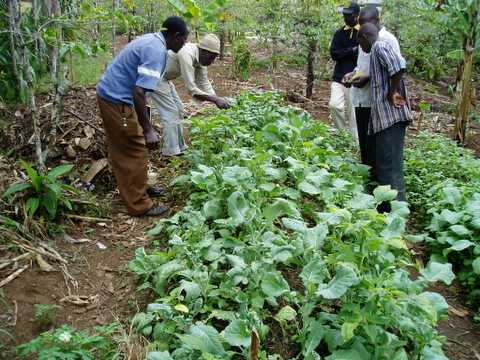
Improved bean trial, Tanzania

Farmer growing artemesia, an anti-malarial plant

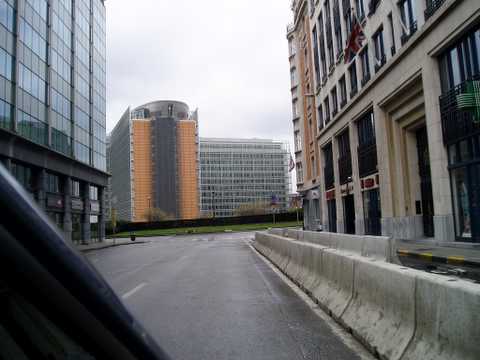
EU headquarters, Brussels

Iguana, Dominican Republic

Fire fighting seminar, DR

Bio-intensive gardening

Ngorongoro Crater Nat'l Park, Tanzania

Elephant feeding damage

A Floresta Loan

Lions resting after lunch

v2#12

Dec, 2005

I have to say, as we come to the final issue of 'where is bob?' for this year, that it's been a real joy to share my journeys with you. I appreciate the interest and moral support many of you have expressed, and sometimes almost feel like we are making this journey together. In fact, as the world grows smaller and smaller in this 'global age', I sort of feel like this job I have is a metaphor for the increasing inter-connectedness (both positive and negative) that our species is experiencing.

In that same spirit, I'd like to encourage your feedback. What do you like/not like? What would you want to hear more about in the future? Or, if you want to stop getting this email altogether, please let me know that too. Conversely, if you know anyone who would like to be added to the mailing list, please put me in touch with them. Much to my surprise, the number of people receiving this update has actually grown over the past year. And of course, I'd always love to hear about where you are, and what you're doing.

To answer the question for the last time in 2005, I am in the Toronto area, and will be until early February. For those of you in the area, if I haven't seen you already, maybe our paths will cross in the next few weeks. For all of you I wish you a Merry Christmas, and look forward to starting Where is Bob volume 3!

Bob

Had trouble picking my favourite photo of the year, so I tried to pick one related to the topic instead. I took this photo in Honduras, but the far side of the bridge is in El Salvador. Every year hundreds cross this bridge on their way to the promised land (Los Estados Unidos). Some may have already travelled far by the time they get to this bridge, places as far away as Africa, and the Middle East, but for many, the journey begins right here.

Wednesday, November 23, 2005

Northern Thailand Oct.-Nov. 2005

Here's a few shots from my Oct-Nov 05 trip to N. Thailand. I spent the month setting up small experiments with some difficult to propagate tree species, as well as just learning about the area and people.


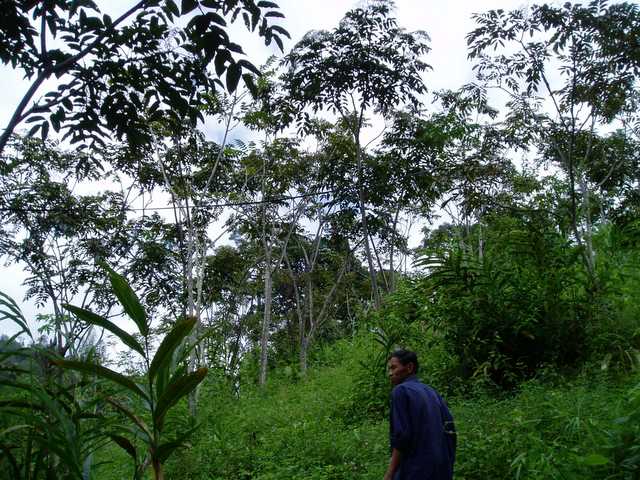
Zanthoxylum in N. Thailand

Looking for Zanthoxylum seed in Burma

Typical lowland rice paddies


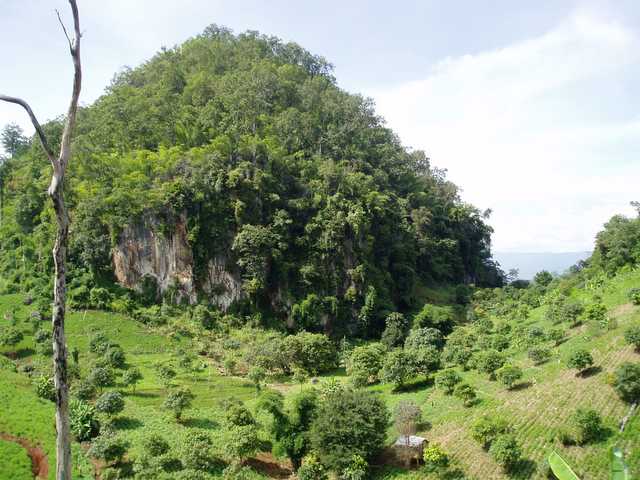
Dispersed trees with annual crops

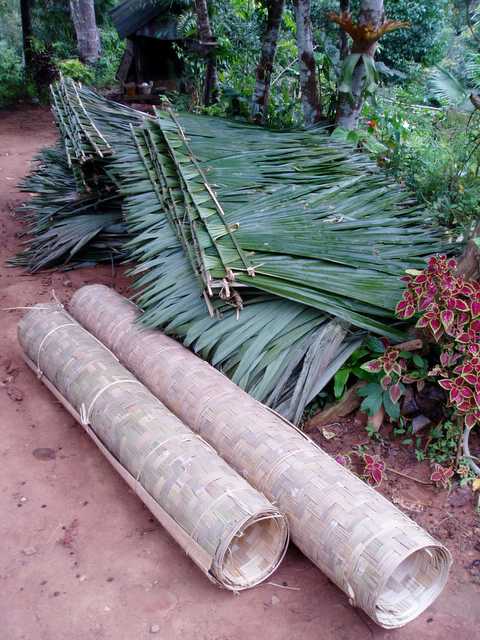
Non-timber forest products: bamboo mats and fan palm roofing


iced coffee

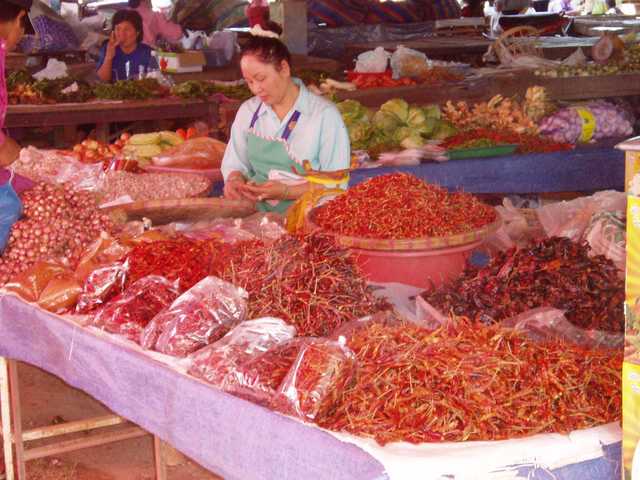
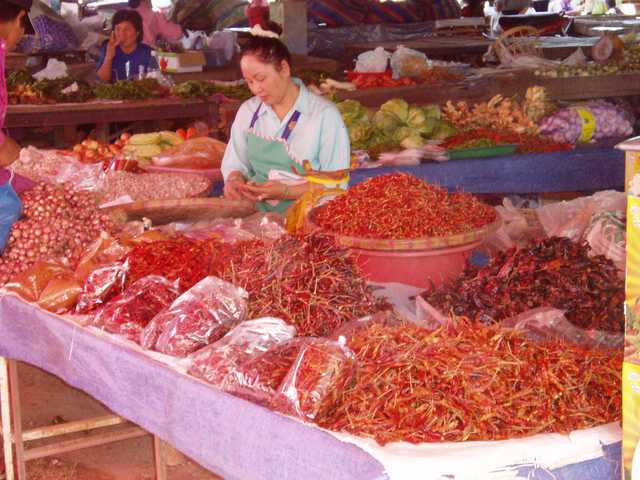
hot peppers in the Fang market


transport on the Mae Kohk river

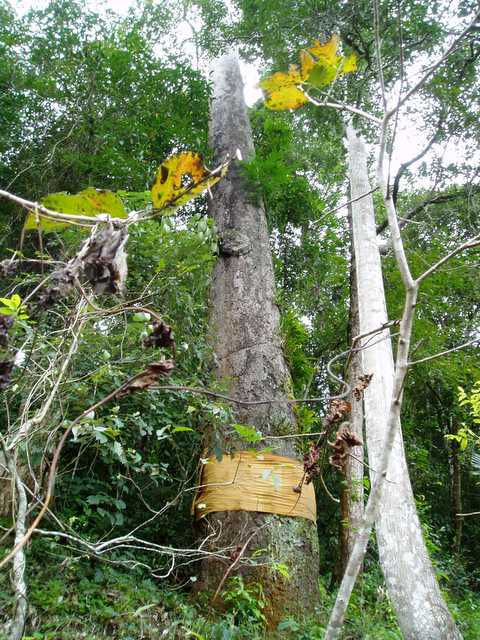
tree believed to be inhabited by a spirit, marked and protected


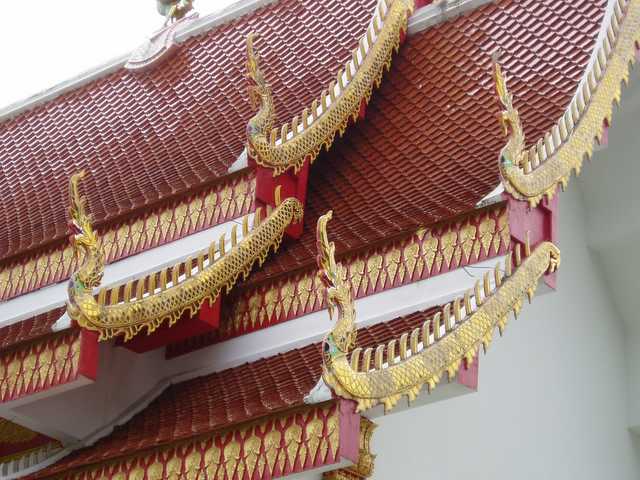
Buddhist temple in Chiang Mai


Monday, November 21, 2005

v2#11

Sometimes you feel a little isolated up here in Northern Thailand, sitting in the jungle, staring across the Mae Kohk River at a Burmese army outpost perched on top of a distant hill. This feeling of isolation can become even stronger when your ice coffee runs out and you can't see the waiter anywhere. Not that I spend every day at nice resorts on the Burmese border, but that particular day I was acting as driver for one of the student interns who was giving a talk to some tourists on organic gardening. The organization we are collaborating with here (the Uplands Holistic Development Project or UHDP) promotes organic farming, agroforestry, and forest management all with the aim of helping hilltribes of northern Thailand make a living in ways that are good for them and good for the forest. The hilltribe people are in many cases refugees from Burma, escaping war and persecution, and find themselves in a new country, Thailand where things are better, but they are still given a hard time by local people and often are living without any legal status.

My role here for the past month (in addition to acting as temporary driver) has been to help find ways to propagate a couple of plant species used in agroforestry systems here that are difficult to grow. This has involved travelling around the area a bit, even one day into Burma to look for seed of one species, and also talking with several farmers who are knowledgable about propagation, as well as working in the UHDP's tree nursery. It's been a good month, made even better by iced coffee and copious bowls of Thai noodles.

Bob

looking across the Mae Kohk River into Burma

 Posted by Picasa

Monday, October 17, 2005

v2#10

Still in Canada. Leaving for Thailand this week. I've been home actually for almost two months, and I must admit it's been nice. Had some down time, had a chance to do some of the fun things I like to do here, and spent a lot of time reading. Reading mostly about plants of Northern Thailand as well as other work related topics. Don't get me wrong, I still get this adrenaline rush when those big turbine engines kick in and the plane lurches forward, pulling off what always seems impossible to me, which is launching that huge chunk of metal, and 300 people, and all their luggage (do you see what some of these people take?) into the air. I find my adrenaline levels tend to stay elevated for the duration of the trip--whether it's one week or one month, or longer, I find I'm constantly having to adapt and adjust and react to the unfamiliar or the surprising. You should see me when the plane touches down at Toronto airport (on this particular trip, late November). I'm always a basket case for at least a couple days.

Bob

Photo is shot from my balcony. Note the new condo construction now blocks view of CN tower.

Thursday, October 13, 2005

v2#9

I suppose that maybe, it's sort of an interesting coincidence that Africa's tallest mountain, and Africa's biggest lake are so close together (note to hydrology geeks: they are not in the same watershed). If you could charter a plane from one to the other, you could probably make the entire trip in a couple of hours. There are however, significant contrasts between the two. For one, Kilimanjaro is tall and pointy, Lake Victoria is flat and not so pointy--except in the afternoons, when the wind tends to whip up the shallow waters. Both are under severe enviromental pressures, although not for the same reasons. There are so many tourist hiking up and down Kilimanjaro that the porters are now having to pack the poo off the mountain (that's right, you heard me!). Lake Victoria also suffers from an influx of various pollutants, but since there are no porters around, green algae is performing more or less the same function and the water is a cloudy pallid green for as far as the eye can see. Please don't get me wrong, in spite of man's worst efforts, both mountain and lake have somehow managed to hang on to their dignity. In fact both are stunningly beautiful.

Lake Victoria in the evening

A lesson in giving

People sometimes ask me about the challenges of travelling and working in developing countries. I would say that one of the most difficult things is dealing with poverty up close and personal. Everywhere you go, it's with you. Years ago, long before I joined Floresta, I learned a tough lesson about that.
I had lived in Jamaica for a year, doing similar work to what I am doing now, and my term there was almost up. It had been a frustrating year largely because of trying to cope with the poverty. Just days before I was to leave the country, I was walking out of the local grocery store, perhaps feeling that frustration in the back of my mind, when I saw one of the local street kids approaching. This was not a major town by any means, but still managed to have it share of street kids who, by whatever means possible, managed to eek out a living. This kid was a regular around the store, and would often try and beg a dollar or two from customers coming out of the store. I have always found those kinds of situations awkward, and in this case it was made even more awkward by the fact that I was carrying a grocery bag full of more stuff than this boy had probably seen in months. By now I knew the pattern, I knew he was about to ask me for money, so before he could get the words out, I somehow thought it would be clever to turn the tables, and I said,"I beg you one dollar!" This poor kid, without even the proverbial shirt on his back, maybe 7 or 8 years old, had a stunned, even bewildered look on his face. He looked down at his feet, somewhat painfully I thought, and then slowly reached into the pocket of his filthy shorts and pulled out this tattered bill and pushed it towards me.

Such a simple gesture, and yet nothing short of heroic in my eyes. My request for money, I'm sure, was unexpected to him, but his response was even more unexpected to me, perhaps to both of us. I doubt if that boy knows what a profound influence he has had on me.

Few, I think could match the generosity of that boy (see Mark 12:41-44). Yet those of you who support Floresta are, like him, having a profound influence on others. I am humbled when I think of all of those who are making this work possible. Thank you.