Saturday, February 06, 2010

So there's electricity again in Croix des Bouquets. This is a town or suburb of Port au Prince, and where I am staying for the time being. I had heard that there would be no electricity for months. But, street lights are on, and the fridge is running in the house where I am staying. Apparently in other parts of Port au Prince, there are so many power lines down, that they can't turn the system on for fear of mass electrocutions. I guess those are the parts that will take months to get current. Seeing lights on, and hearing a fridge humming is lulling me into a false sense of normalcy. Fortunately I was told by one aid worker today that she is working from 5am to 12pm everyday. Knowing this should keep my illusions in check. Plus I was complaining about 6 am to 10 pm days


Lights on--note the gecko to the right: how do they stay upside down like that?
I have to say I love my new tent. Sets up and breaks down easily. I can do it with my eyes closed, which is important since I'm mostly setting it up in the dark. It is easy to get in and out of, and packs small and light. One qualification is that it hasn't rained yet, so I don't know about the water-proofness.

In any case, I highly approve so far. So, MSR, if you are looking for an endorsement: Haiti emergency response approved, in exchange for a donation of shelter materials of some kind, give my office a call: 858-274-3718.

The Floresta Base Camp:

The neighbours:
As we bounced our way down the road out of our project tonight in our pickup, on the way back to Port au Prince, I was reminded of a time, a long time ago, when I worked for another organization called ECHO (www.echonet.org--great organization, I highly recommend their internship programme if you are a recent university grad, and thinking about ag. development). I remember bouncing down a similar Haitian road, albeit in a different part of the country, and the group of us somehow deriving our own lyrics for the John Denver song, "500 miles". I don't know if you're familiar with the song, but our version was,"5 Haitian miles, 5 Haitian miles, Lord I'm 5 Haitian miles away from home. Lord I'm one, Lord I'm two, Lord I'm three, Lord I'm four, Lord I'm five Haitian miles away from home..." Tonight this still struck me as very funny as my shoulders head, and buttocks were constantly assaulted by various parts of the truck.

Thursday, February 04, 2010

One thing that gives me a great deal of hope is the way the Dominican Republic is responding to this crisis. They were certainly the first country to respond with direct aid, and have greatly assisted with the flow of goods into Haiti, as well as continuing to supply materials and food aid. One of my colleagues in the DR was telling me how Dominican women were wet-nursing Haitian babies who were arriving in the DR after the quake.

Our experience working across the border has shown us that the relationship between the DR and Haiti is close but delicate, and can be both hostile and violent at times. Is this event possibly a catalyst for bringing the two countries closer together? The aftermath of the quake presents so many opportunities for change. It is an historic moment for sure, and perhaps will in hindsight be best described by the words of Charles Dickens: "It was the best of times, it was the worst of times."

See below a Dominican transport truck carrying food aid:


So yesterday, somehow, I ended up slinging bags of rice anyways. I decided to take a day away from the proposal writing stuff and follow our food distribution crew with my camera, ask some questions, collect some info etc. On this particular trip, a truck full of rice needed to be off-loaded at our office in Gran Goave by hand. So far we've moved almost 7 metric tonnes of rice to communities in our project areas where people from the city are migrating back to their families out of desperation. Almost all families have additional mouths to feed, and some families have doubled in size. One of our staff was telling me of a family in Trouin which now has 32 people. The distributions have so far been orderly, and peaceful, and without military escort. This I suppose is partly because it is a rural area, but also I think because we have a long standing relationship with these communties and organized groups in each area.

Tuesday, February 02, 2010

This morning around 5 am the dog decided to pee on my tent. So I woke up to something dribbling on my forehead. I chased the dog around for a while in the dark, and then tried to clean up the tent, and sleeping bag as best I could.


Today will be the first day of our food distribution to the rural areas where we work. The majority of food aid at the moment is focussed on urban zones destroyed by the quake, and most of that is staying in Port au Prince. But our technicians did a rapid assessment and we have data that indicates that family sizes are increasing by 40%. This means the average household was between 5-6 members before and now is well 8-9 members. In areas near the border with the DR, household size has almost doubled. Sunday night our credit director and his family worked late into the evening preparing the vouchers which we will be using to help organize the food distribution.

Sunday, January 31, 2010


Every time I go inside, or look up at a ceiling, I wonder if it might fall on me in the next minute. One of the youth from Cheridant, where our office is located told me how he was helping with some work on the local church building for some wall repair (pre-earthquake). He related how he was working and then, as he put it, something told him he should maybe try something different, so he got up from where he was, and started for the door. Just at that moment, the way he put it, the ceiling fell on the very spot where he had been.

Now I know you Californians are used to earthquakes and maybe living with that kind danger, but not me.

Saturday, January 30, 2010

Just to dispel the notion that I may be out there slinging sacks of rice, or handing out cups of powdered milk to pot bellied children, well, my days consist more of attending numerous meetings, chasing down various funders and organizations, handing out business cards, making phone calls, emails, and pouring over endless documents and updates. One of things that I am learning about this situation is that what is true now may not be true in 2 hours. So the ground keeps shifting, no pun intended. This makes planning very tough, and adds to everyone's stress level. There are tonnes of people running around the UN compound in a virtual frenzy, trying their best to stay on top of things. I use that term loosely, because really this situation is way out ahead of anybody, and will likely stay that way for a long time.

For us in particular, the next planting season starts very soon, in a matter of weeks. So we have to start preparing yesterday, and do our best to ensure that farmers can make the very best of the season, and provide the much needed crops that will be harvested a few months from now. That will require a lot of preparation both on the ground and on paper.

Friday, January 29, 2010

I haven't been following the news much lately, but I would guess that the stories from Haiti might be about how aid is not getting where it is needed, or about distributions that go bad. The organization I work for has done very little relief work since our focus has always been long term development, but even we are being faced with the urgency of the situation. I have to say that the folks I have met are doing their best under ridiculous circumstances. There are parts of the UN compound where you can't even walk for all the tents pitched one up against another. It is all relative of course. Monday night I stayed in a makeshift camp in a small town called Trouin where I pitched my tent with 180 people sleeping under 6 large blue tarps.

The crazy thing is, that I have always thought people here were living on the proverbial edge. It's heartwrenching, and a little frightening because the consequences of this event I think, are yet to come. I'm sorry for sounding so doomsday, and there is a positive side. I think, as do many, that this is an historic moment, not only for Haiti, but for us as a global community. The only question is will we or can we rise to the occasion? This is not a rhetorical question. I honestly don't know either personally, or otherwise.

Thursday, January 28, 2010

Something I am learning from this situation is that people (and by people, I mean me) only see what they want to see. What I see as I drive through Port au Prince is not the destruction and the terrible living conditions, but I see people adapting, living with courage. I am aware that this is me trying to paint things for myself as brightly as possible, and I catch myself when people point stuff out to me, like, "look at that building", and I realize I had totally filtered it out, and was looking at the merchants still selling produce on the sidewalk, in front of the crumbled blocks, as they always have--just the background has changed.

I apologize for my lack of blogging. I am blaming on a combination of bad internet, and super long days which leave me exhausted and in no condition to type. Plus there is always my tent to set up, carefully placed as far from the nearest buildings. Small tremors continue, although I have not felt any in the past couple days. They have been small, but it feels to me like the earth is growling like a dog, getting ready to attack.

Sunday, January 24, 2010


So this is what I bring? A few boxes and duffel bags of medical supplies hastily purchased at an open-late grocery in Canada, and an open-Sunday pharmacy in the Dominican Republic? I feel like the young boy in the parable of the loave and fishes.

Of course this is just a start. Our goal is to ramp up our provisions to our target areas by coordinating with other NGO's and international organizations. We really don't want to duplicate. There will be plenty of that going on, likely. So my main job here, for as long as it lasts, is to help coordinate between our staff in Haiti (not quite there yet--in Santo Domingo), who are on the ground, ready, and connected with communities, and the numerous Aid organizations who have the goods, but may not be able to get it out there, especially to some of the more remote or less known communities, but who are equally in need. Sounds so simple right? Right?


Every day since the earthquake has gotten longer and longer. I'm still packing, but I bought a steak today (well, Saturday), and I'm determined to eat it before I make the journey to the airport.

Some good news today from our staff in Haiti. With some 150 community members they were able to organize some road repairs caused by the quake and opened up an important (the only!) road into our project area. Our staff are also linking with community leaders to extend the distribution of aid beyond the focus areas (primarily Port au Prince).

So much to say, no time right now. I really hope to have at least sporadic internet and to be able to blog faithfully.

I appreciate all of your thoughts and prayers.


Friday, January 22, 2010

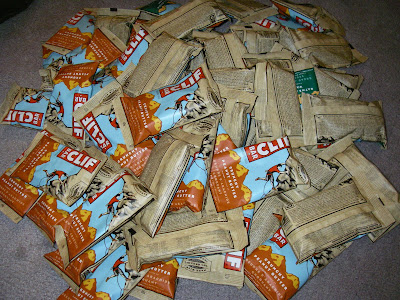
Do you think maybe I'll be sick of Clif bars by the time this trip is over? (I should count myself lucky...

)
I went out a bought myself an ultralight weight, one man tent. I'm going to field test it tonight in my living room
.
While using the chat function in skype to converse with our director in Haiti just now, our conversation was interrupted by him saying there was a tremor, and that he had to leave. I was in hindsight surprised he would even take the time to type that out before leaving.

But I haven't heard from him since, and assume he's ok, but who knows?

Thursday, January 21, 2010

Now, I am going to Haiti. The organization I work for Floresta, needs someone to help coordinate with other organizations for relief. Our staff there are mobilizing to work with communities in our project area to do road repair. They are also meeting with community leaders to formulate recovery plans.

I don't know how much internet connection I will have, but I will try to post something here as often as I am able.

Wednesday, January 13, 2010

I am in Canada, not in Haiti.

I just heard from our director there, and all of our staff are ok, thank God. As you have heard in the news, buildings have been destroyed, the communication system is down, and there have been many deaths.

Monday, December 14, 2009

How things work.

I think my recent experience in an unnamed airport lends some insight into how things work in the developing world. The airport will remain unidentified to protect, well, lets say the involved, since no-one in this story is innocent, including me.

I had arrived at said airport early, way early, and so had seen a couple of waves of passengers come and go, and one of the curious airport staff, the manager of a cafe/bar came over and started chatting. Later in the day, he mentioned that he could bring me some lunch if I wanted.
"There's chicken and fries, sandwich and fries, whatever you want." he said.
"How much is chicken and fries?" I inquired.
"Eleven dollars."
"Wow, kind of expensive, isn't it?" I replied
I should note that all of this is in the local language; an important factor which I'll elaborate on in a minute. Furthermore, I had seen he himself eating a plate of rice and beef just 5 minutes before, which I was guessing came from the airport staff kitchen. I was also guessing this was free for employees.
"What if I order rice and beef, like what you had?" I asked.
He chuckles, and then says."Rice and beef is 15 dollars."
"Fifteen?! Well, what about if I order just rice and sauce, no meat." I counter-offer.
"Maybe 3 dollars, No! 5 dollars." he says, with little hesitation.
"Come on," I say,"how about 4 dollars."
"Let me check with the cook." he responds.
I then thank him and retreat to my airport bench located slightly away from the cafe.
The cafe manager then carries on with his day, apparently not inquiring about my rice and sauce at all. I wait patiently and after about a half hour, he comes by my spot and tells me he is going to check with the cook now. Five minutes after this, he shows up with a steaming plate of rice and sauce; there's even a little meat in there, and hands it to me while informing me that the cook says 5 dollars. I nod and gratefully accept the plate.

Here's the thing. The food I got was tasty, 10 times better than the plastic wrapped sandwiches that are normally offered, and likely free to airport employees. I'm assuming that the cook probably did agree to 4 dollars, and the cafe manager with whom I negotiated, added an additional dollar for a 'handling fee'. And although I am paying for what is technically free food, I am paying one third of the official price if I had ordered something similar off the cafe menu. So everyone wins right? Not quite, I don't think. It seems like an ethical gray area, and one might argue that it's actually some subtle form of corruption.

Regardless, like I said in the beginning, it does provide some insight into how things work. One could probably try to analyze the haziness of the whole scenario, the non-linearity and randomness, and how what occurred was based more on the apparent established relationship between the cafe manager and myself, rather than any kind of menu, or marketing structure etc etc.

I wanted to come back briefly to the whole language thing. I am pretty sure that what occurred would have had a much lower chance of happening if I had been trying to make the transaction in English. In general I would say speaking English probably costs twice as much as speaking the local tongue, even just a very few words. For whatever reason, the majority of people respond to hearing a foreigner struggling to communicate in the local dialect. I mean, I don't try to learn language to save money, but it does seem to be a side benefit.

Sunday, December 13, 2009

Christmas

I think I just heard my first Christmas carols of the season being sung in Swahili by a group called Maimbo Pamoja, on a TV mounted in the lobby, next to the oscillating fan in the Muslim guesthouse, while waiting for my room receipt for 8000 Shillings. The guesthouse is in a dryland plain area in the town of Boma, about 15 minutes from the Kilimanjaro airport. For some reason, experiencing 'Gloria in excelsis Deo" completely cut off from all my normal cultural cues, without any fanfare or flourish, made it a moving moment for me. Now I begin my long journey home, including the not to be missed extended layover in the Nairobi airport, where I am beginning to recognize some of the employees and vice versa. Perhaps I will wish them a Merry Christmas.

Wednesday, September 02, 2009

I really think everyone should visit Tanzania. But then I think that about just about everywhere. So maybe the moral is that you should just go somewhere. Something amazing is sure to be there. My apologies for the lack of posts lately, and for the uninspired nature of this post. I'm hoping in the next couple of evenings, while spare time and good internet connection coincide, to put something down on paper. Here is the view of the garden in late evening light from where I send this message to you.

Thursday, April 23, 2009

Translation Requested

I am looking for someone who is willing to translate Chinese to English. At least this page. There is an entire 48 page manual which needs translating, but who has that kind of time? If someone is interested, I can guess at the critical pages and send them to you. 

This is the operating manual for the microhydro unit that I mentioned in a previous blog entry. It clearly has application for a lot of the places that I visit.

Saturday, April 11, 2009

This is my last entry in this 40 days of blogging. I didn't quite get an entry in every day, but it is a testament to the availability of internet (truly worldwide) that I missed as few days as I did. I wish I had something profound to share with you , something inspiring, but in lieu of that I have posted this song. Please don't be put off by the artist, or the style of music.

Happy Easter.

Friday, April 10, 2009

The thing that seems to happen is that whereever I happen to be is the reality, and those other places I've been just recently? They seem to be a very far. distant memory. In fact was I really in Korea earlier this week? I think the brain just naturally filters out stuff. It's like what they say about people with photographic memories. In some cases their brains can't distinguish between important and unimportant information and it impedes their decision making ability. They have to work at trying to block out or forget some information just to be functional.  Still, in this case, I have to do analysis and report on those far away places, which means I have to dive back in and immerse myself in that memory again. Except Korea, that was just a tourist stop. One of the few times ever that I've allowed myself, even briefly, to be 100% tourist. 


Random photo of some random Korean tourist attraction. I didn't even write down the name of it, or find out how many hectares of land it is on, or what kind of crops they grow around there. Take that serious part of my brain!

Thursday, April 09, 2009

Last night I had a chance to meet a group of people from a local church who are working with a community of Haitians living in the Dominican Republic. I really admire the fact that first of all they are concerned about some folks living in some really difficult circumstances, and second that they are thinking about and wrestling with the best way to reach out to people in need. It was a chance for me to learn and also to be encouraged.  So often, you see kind of the opposite, that is, general indifference, or people trying to help without thinking it through and doing more harm than good. If you've taken first aid training you know about this concept; people trying to help an accident victim and causing even greater injury. 

Wednesday, April 08, 2009

For those of you who are thinking it is a strange coincidence that I would show up in S. Korea one day after the N. Koreans launched their missile, so am I. I didn't even know it had happened until I got their and our tour guide was talking about it. She claims that S. Koreans are not so concerned, and that the Japanese are more worried. I myself was so taken by the beautiful spring weather and the impressive airport, that something so menacing seemed far away and of little importance.
I made it. Minus one bag of course. I am beginning to wonder if  there is something about that particular bag which makes it easy to lose, since my record for lost baggage is well over 50%. This particular time it happened to be Air Canada, but the previous time, in March was SwissAir.

I arrived last night and slept til about 8 am this morning. When I awoke, I thought, "Great, I'll get up, have some breakfast, maybe take a walk, and start to get back into this time zone...". About 10 hours later I woke up again, realizing I had missed my opportunity. Well, perhaps tomorrow.


Monday, April 06, 2009

Sorry for going on and on about this airport. At this stage I feel more like I am documenting my slow descent into the emotional and physical exhaustion that is the end of a trip. It starts to become about the smallest of things, like I am so happy to see the sign posted that my flight is departing on time, at the proper gate. The next relief is to actually see the plane at the gate, being prepped for the journey. Probably why I would make an entry about the potted plants for example. Those of you who have experienced this know that it is a feeling of unreality, almost an out of body experience, like you are actually sitting in the seat beside yourself, hoping that everything goes smoothly and that you are at home in your own bed as soon as possible, but knowing the whole time that you have miles and miles to go before you sleep. 


What the future holds? Purchased from a McDonalds quality coffee facility, a cafe latte as good as any at Starbucks. Also breaking the rules of travel (see post from March 01). Not to mention another travel rule which I didn't mention: always eat local. 

Incheon Airport

I used to think that Singapore airport was the nicest one I had been to, but now I believe it has been replaced by Incheon. This is a beautiful facility, with all the things I am looking for, free internet of course, seats with no  arm-rests which allows one to find an unoccupied area and stretch out for a nap. It is also very clean. Maybe that won't last as it starts to age, but it really makes one feel much better about hanging around.  Even the bulgolgi I had for lunch was quite delicious and would be worthy of and 'outside' restaurant. And little details like the plants, which are real, and it appears that the airport may have designed their own containers to hold larger shrubs and trees.  I think you can see that the plant in the photo is even labelled, which I love. 

They have also set up these 'Korean Cultural Experience Zones' where visitors can see various cultural items, make crafts, and hear live performances. Below is a musician in traditional dress, playing some sort of Korean guitar (sorry I don't know the name). The sound is very woeful and just added a whole other dimension to my visit.

In general, the airports of south east Asia are in great shape, and seem to symbolize the rising fortunes and power of this region, just as much if not more than tall business buildings and sports facilities.
So I did it. I left the airport and did the temple tour. Which turned out to be 10 dollars not 5, but oh well. It was nice to get out and walk around, and learn bit about history, culture, and language here. Our tour guide was really very good. It was also nice to not have to feel too responsible, just play the dumb tourist and point my camera at random stuff. The plant ecology here is strikingly Canadian, and I think they may even have the same species of pine, P. sylvestris (Scot's Pine), or something remarkably close. It was also quite cool, about 7 or 8 C, much like I expect it is in Ontario at the moment. In about 24 hours I'll be able to tell you myself.

Early spring blossoms in a temple forest in Incheon, Korea


Sunday, April 05, 2009

Korea

Currently in Incheon airport just outside Seoul. Nice airport. Had a shower for 6 bucks, feel much better. Free internet. There's even a temple tour for 5 bucks, which would get me outside the airport, and therefore allow me to add S. Korea to the list of countries I have officially visited. Still, I don't know if I really have the energy to do so. Plus I just visited the display of Korean ceramics inside the airport, does that count? The also have a Traditional Korean Culture zone which I intend to see as well.
Funny thing about travel days, is that the place you start out in seems like a distant memory by the end of the day. Right now I'm sitting in the BKK airport, at quite literally the end of the day (11:44), and I looked in my wallet and saw a 100 Riel note, and wondered what it was. It took me a couple seconds to register that I had actually been in Cambodia at the start of this day. I once saw an article in Scientific American from the 18oo's which was questioning whether the human body could withstand speeds of over 25 miles per hour which it would be subjected too by the coming modes of transport. Seems silly now, but personally I think the way we (I) race from place to place may be physically possible, but is probably not great for the psyche. And the way I'm feeling right now, I don't know if that article was so far off on the physical side either.  Never mind, only three more flights to go, 12 times zones and a date line to cross, and a 10 hour layover in Seoul...

A 100 Riel note, worth about 2.5 cents US.
...

the journey home

And so the final leg of the journey begins. I've had a number of airline related mishaps this trip, so we'll see what happens. Still, it has been a good trip otherwise. I feel like my brain is full and it is going to take some time to digest everything. Sitting on a plane, semi-comatose and fading in and out of movies is precisely the holiday my brain needs.

Friday, April 03, 2009

Phnom Penh

This is Phnom Penh capital of Cambodia. Quite unlike the rest of the country, or so I am told. Sadly, I am only here 5 days, and won't really get to see the 'reality'.

Thursday, April 02, 2009

Microhydro in Burma

Here's the promised shot of a microhydro unit. I love the fact that we are carrying a technology out of Burma which has potential to benefit other parts of the world. I could see cottagers in northern Ontario using this:
I'm sitting in an office of an NGO in Phnom Penh. We just finished our meeting with staff and begged some internet time before our next meeting. We had a chance to ask a whole lot of questions and are starting the learning process for a new region. I have to admit that I am woefully unprepared for this trip. Normally I would read up more on the country, study the history etc, and learn some basic language stuff. This time I don't even know how to say 'thank you', which is embarassing. 

Wednesday, April 01, 2009

I am in and out of Burma. No way to post any posts for 2.5 days. It was a good trip, lots to say, some to leave unsaid. I am carrying out a technology that may be useful in some of our program areas--microhydro. These are 1-3 kilowatt generators that run on as little as a 2 metre drop in water, and are being used all over this part of the country now to power just a few houses each. So I bought one for 75 bucks and hope to take it out as checked luggage, through Bangkok, Phnom Penh, and then onwards to Canada. From there I'll probably take it to Haiti for a field test. Picture later, got to run to my next flight to Cambodia...

Saturday, March 28, 2009

the end of poverty

A friend of mine emailed me the other day with some comments about Jeffrey Sachs book, the End of Poverty. So as I was sitting in a cafe on the side of a muddy street in downtown Dar es Salaam, watching poverty come and go, I got to thinking about the end of poverty. Not that I claim to know how to end it, or feel in any way qualified to critique an eminent economist like Sachs, but it seems to me talking about the end of poverty, one might just as well talk about the end of greed, or the end of selfishness, the end of cruelty, or the end of low self-esteem.  Of course there are logistical, policy and economic factors to poverty, by definition, but I believe, at the heart of the matter, poverty is, well, a matter of the heart (my apologies if I have accidently plagerized any country and western lyrics).

A streetside cafe where one might be inclined to reflect on poverty.
As of yesterday, I have officially completed 9 of the 18 flights that make up this trip. So by my estimation I am half way through the trip. At some point in the next week and a half I will cross the international date line backwards which means I will be a day younger on my arrival in Canada. This is the second time I have done this, and I intend to keep flying around the world in the same direction as a contribution to expanding our medical knowledge.

Cultural Paralysis

The other day I had a distinct cultural paralysis moment. To the best of my knowledge, my boss is the one who came up with the concept. 

Cultural paralysis: a condition of complete social helplessness brought on by an inability to distinguish among the taboos and etiquette of multiple societies. CP is most acutely experienced by those who have travelled and lived in 3 or more countries and can no longer remember which rules apply to which location.

In this particular instance, I was sitting in a restaurant at lunch and the plate of chicken and rice had just been set in front of me. Suddenly I realized that I wasn't sure how to eat the chicken. So I started eating the other stuff and (as subtlely as possible) glanced around the table to see how others were eating the chicken. The thing is that in some places you leave the piece of chicken on the plate and pull off small pieces with your right hand. In other places it is perfectly acceptable to pick up the chicken and eat it off the bone. Turns out I saw people doing both.  The one person I saw picking off pieces with the right hand also happens to be from a more Muslim part of the country. So, I think it may be that in some parts of Tanzania, the picking-off-pieces technique may be more acceptable. So my lapse may have helped me learn something that otherwise I would have kept assuming that I didn't need to know.


Friday, March 27, 2009

By the way, I'm not sure what the next 48 hours or so holds in terms of either travel or internet access, so I may be offline for a little while.
The Mtwara trip is almost over. In theory our flight leaves today around noon, or at least that is what is printed on the piece of paper which is ostensibly my ticket. Since this trip has been so far fraught with a number of travel incidents, I am holding my breath.

But it has been a good week. Exhausting and long days, but we've learned so much and I think we have at least a start on getting a good perspective on what role we might play here. My Tanzanian colleagues have been great, and on many occasions took the initiative when I couldn't. This is the first time I've done a new program exploration with others, and so prior to the trip I was a little apprehensive about whether things would go smoothly or not. One of the best things was one evening when the three of us were sitting in a restaurant and a local cashew seller came around our table with his tray of small bags of freshly roasted cashews. He was just trying to sell us maybe 50 cents or 1 dollars worth of his product, but it soon turned into an in depth interview of small scale cashew processing and marketing, and he ended up sitting at the table with us for probably an hour. He seemed quite willing to share info, and even pleased that someone was taking an interest in his vocation. The conversation was entirely in Swahili which means I was following very little. I really appreciated how my colleagues adapted to the chance opportunity, and turned it into a small gold mine of useful 'data'.

Thursday, March 26, 2009

So there's been one concrete outcome at least from our visit here in Mtwara. We met with an organization which has asked our staff here to help them build some rain-water harvesting tanks, a technology which we promote in the area where we are working in northern Tanzania. So our country director here agreed to send a technician who would help build one or two tanks and the organization here in Mtwara has agreed to cover the costs. An un-expected outcome, but a satisfying one nonetheless.
I think the worst kind of road is the kind where it is relatively smooth for moderate distances but then occasionally pocked by axle-cracking potholes, strategically placed like sand traps on a golf course. This allows the driver to approach highway like speeds under non-highway like conditions. One gets fairly adept at anticipating  the bumps and tucking one's head and bracing for impact with the roof. This effect is particularly exaggerated in the far back seat of a 4 x 4 vehicle. Not sure entirely why but it probably has something to do with basic geometry. Anyone sitting between the axle has their motion somewhat moderated, while anyone sitting beyond the axle base is like sitting on a see-saw. This means you get slapped like a pancake if the bounce is hard enough. This particular road yesterday seemed to stretch in a remarkably straight line cutting a swath to the horizon and off somewhere into the interior of southern Tanzania.

Wednesday, March 25, 2009

It's hot here in Mtwara. I got up just after 6 this morning, when it is dark and should still be cool and it was already hot. Even if you move really slowly, you heat up quickly.

Tuesday, March 24, 2009

I wish I could show you a photo of the streams of women labourers leaving the cashew processing plant this afternoon. I just didn't have the heart to take the picture. It was literally like a human river flowing out the company gate. Literally thousands of humans flowing down side streets and paths heading home in the rain.

Monday, March 23, 2009

I'm almost out of battery so I better make this quick. Weve spent the whole day visiting cashew factories and talking to cashew processors both large and small scale. It is definitely the lifeblood of this area. Whether we as an organization have a role to play here in helping production, or diversifying production or something else is still hard to say, but we've had alot of interesting discussions and learned a tonne. For example, cashew oil can be used as brake fluid and wood preservative, and cashew husks can be extracted for use in makeup.  The plant we visited this morning is the first in Africa, and the largest in the world. Unfortunately I was not able to take a picture of the 1200 women working on shelling the raw cashews. It was quite a sight.


Sunday, March 22, 2009

Mtwara

So here we are in Mtwara, two of my Tanzanian colleagues and myself to meet cashew farmers and others in the cashew industry, learn about what is going on, and to exchange ideas about future collaborations. This 'first contact' in a new region is a critical moment in time, a sort of tipping or balancing point when the new contacts don't know you and you don't know them, and every single minute everyone is assessing how much they might trust or distrust the other party. It is sort of an exciting process but also a bit stressful. I find that one also tends to collect information about the situation and make assessements based on all kinds of inputs tangible and intangible. We've got 5 days here to make our initial call. I'll keep you posted of course.

By the way, I was obliged yet again to check a bag and it did arrive and is here with me safely at the guesthouse. This drops my lost-bag percentage probably to somewhere around 50%.

Saturday, March 21, 2009

Coincidental Meetings

My travel schedule requires me to stay in a small town outside Arusha last night and tonight. I booked into a local guesthouse which offers clean but small rooms and breakfast for 5000 Tanzanian shillings (about 4 USD). These kinds of guesthouses are not frequented by tourists or even NGO types, so it was a huge surprise to me when I walked into the lobby and ran into an old colleague Charlie Forst. Some of you may know Charlie since he is somewhat famous in ag development circles and worked for ECHO for many years (www.echonet.org).

I had the privilege of working with Charlie in Haiti in 1996, and it was an opportunity for me to learn and be challenged. Really, Charlie is a genius. One of those people who applies himself and excels at everything they turn their mind to. He has lived through wars, embargoes, and generally extreme situations in some of the poorest parts of the world. I would guess Charlie is now at least in his 70's if not his 80's and is still going strong, working on water and agricultural projects here in Tanzania. Again, all these years later, I have so much to learn from Charlie and it is inspiring to have a chance to pick someone's brain with so much knowledge and experience. Everywhere Charlie has gone, Haiti, Peru, Congo, Kenya, Tanzania, the US, he has made a positive difference for individuals and communities. He even met then Senator Obama on his African tour. There should be more Charlie's in the world. I feel very fortunate to have run into him again, completely by 'accident'.

Today's travel tip

Should you find yourself in a mosquito infested area with no proper window screening or mosquito netting, you can use a sheet tucked in around the sides, and then wrap the top around your head like a mummy sleeping bag so that only your nose and mouth are exposed for breathing. This will not eliminate bites altogether, but will greatly reduce your exposure and at least allow you a semi-decent sleep. Not great in really hot climates, but it's a trade-off between comfort and malaria.

Friday, March 20, 2009

another travel tip

I've tested many different types of travel towels over the years, you know, the ones that dry quickly and pack small? But I would have to say that the one I would recommend the most (don't laugh) is the sham-wow, the one you see the ads for on TV. Seriously. Many of the other travel towels either don't lather soap well, or don't have the required scrubbing action, but the sham-wow does, surprisely. It's my latest discovery.
Well, I can say, that after trekking up and down farms here for the past 2 weeks, that people are definitely planting lots of trees, and the trees are doing well. It is a little harder to separate how much tree planting is just normal tree planting, and how much has been influenced by our program. We do try to collect data to show the the program is having an impact, but based on what I've seen with my own eyes, I would say that farmers have been encouraged to plant more trees. There are new trees (1-5 years old), on almost every farm we visited. In fact, for the carbon program we are hoping to implement, this is ironically a problem, since farmers are filling up every available space, and on some farms there may be no new space for carbon planting. We are trying to work on a design which will not penalize these motivated and forward thinking farmers.

Some of the many new trees that I saw on farms during the past 2 weeks

Wednesday, March 18, 2009

I've noticed a couple of times now while we are doing tree inventories on farms that collection of wood seems to occur almost without thinking about it. It is probably worth pointing out that taking a tree inventory involves walking all over the farm, around the outside, and back and forth across the middle a bunch of times, so I'm sure that the farmer is thinking, that if these folks are going to be doing all this walking, I might as well make good use of the time and pick up a few pieces of firewood. I would love to know what people are thinking about what we are doing, since it involves so much walking and no visible end product. Just a few sheets of paper with some numbers scralled on them. At least the farmer comes away with enough kindling to start tonight's meal.

Tuesday, March 17, 2009

Here's a photo of my kilo of organic coffee beans purchased directly from the farmer (could there be any fairer trade?). Just as proof for those of you doubters who think that a purchase made in the market sight unseen would actually result in a successful transaction. The beans were delivered by someone the farmer and I know in common who happened to be passing by Mshiri (the farmer's village) in the morning, and passing by the Floresta office this afternoon.

Monday, March 16, 2009

Today around noon our motorcycle got a flat tire. Convenient, since we could drop it off at the local tire repair, and walk 5 minutes to one of the favourite lunch spots in the market. When lunch was over we returned to the tire repair but since the repair was not quite finished, I ducked into the shop next door for shade. It happened to be a tailor shop, and I had just noticed walking over that my travel briefcase (REI no less)--in which we were carrying all our survey gear, had a design flaw. Hard to explain, but I realized that a few quick stitches would fix the problem, and since I happened to be standing right in a tailor shop at that moment, I asked if they could make the improvement. Which the tailor did immediately and it took him about 5 minutes. I should patent the idea and sell to REI. The tailor didn't even charge me for the work. And while this was going on, I ran into a farmer who is growing organic coffee and had agreed to prepared 1 kg of green coffee beans for me last week. We were able to finish our transaction, and arrange for the beans to be delivered to me within the next day or two. At about that same time the tire repair was done, and we hopped on the bike and headed back to work. I love it when things seem to work together like that. Only in a third world market, I think

How to eat ugali

If you've done a web search and are hoping for advice you are out of luck. I have been trying for some time to figure out how to eat ugali properly and still make a mess of it. Ugali is the thick porridge eaten commonly here, and is usually made out of corn flour, or sometimes cassava, or even wheat. It is eaten with the hands, actually just the right hand, and you take some from your plate, make a ball, and then dip or scoop your sauce, meat, or vegetables. I can eat a meal of ugali, but I always manage to get food all over my hand, whereas my eating companions may have a bit of food on the tip of their fingers, but generally they are much tidier. I've asked several people what the trick is, and tried to watch how others are eating, but there seems to be some subtle thing that I'm missing. If there is anyone out their who knows what the secret is, I would be grateful. As it is I eat like a five year old. Which really, being in another culture is often like being a child over again, talking like a child, eating like a child, having social graces like a child.

Sunday, March 15, 2009

Today was Sunday and I did go to church. There's an Anglican church in Moshi called St. Margarets, which I used to attend regularly when I was here in 2003, and have been fortunate enough to get back to semi-regularly over the years. Now sadly, the pastor and his family are leaving for the UK. People come and go in the ex-patriot community, and there is hardly a single ex-pat, here that I know that was here 5 years ago. So to see this pastor and his family, whose friendship I have come to appreciate, go, is, well, sad, and a sign of the transient nature of our culture. Yet another symptom of globalization.

Saturday, March 14, 2009

On the down side, I should tell you that there is some tension between the staff here and the first community where we started working. Back 5 years ago, we invested a lot of time in meetings, planning, and general discussions with this one community to get the project going. We did spend time making contacts and meeting organizations and community leaders all over Tanzania, from Babati and Arusha in the north, to Iringa in the south, and from the Vice-President's office to farmers. However, our very first activities on the ground were in this one community, and it seems that some in that community have interpreted that as meaning the project belongs to them. This has resulted in some bad feeling and some uncomfortable meetings in this community. It makes me feel bad personally, because I was involved in that initial stage and surely contributed to the misunderstanding. It also makes me feel badly for the staff since it creates additional anxiety for them, and I feel badly for the community since false expectations may have been created.

Community development is not easy, full of disappointments and set backs, but in a sense, it is kind of a good sign that this particular community wants to claim this project as their own. If we were being ineffective, or worse, having a negative effect, I would expect people to react with indifference, or even to try to distance themselves from the project.

Friday, March 13, 2009

While sitting outside at a restaurant at lunch today with my co-workers, an older gentleman, apparently a Masaii traditional healer/shaman approached our table and with a bag over his shoulder and a wooden staff. He started to explain his profession, and showed us a piece of paper with various medicines and their prices. After some discussion, he claimed that he had identified a couple of health issues that I had, and then offered to prepare the necessary treatments from the bag he was carrying. But before this could happen, he asked that our one co-workers who is a woman, to leave the table, because he could not discuss one of my apparent problems in front of her. After some discussion, Eva graciously left the table, and the healer then pulled out a couple of different powders, which looked a lot like sawdust to me, and mixed them in a small plastic bag. After spitting on the bag, he then handed it to me, and said the dispensing fee would be 3000 Tanzanian shillings (about 2.50 US). I did not actually buy the product, in case you are wondering.

Thursday, March 12, 2009

The main purpose of my visit here this time, is to complete a tree inventory from a sample of the communities where we are working here, and to complete a household survey of usage of the improved stoves which we are promoting. As a result, the staff agronomist here, Albert Mwambo and myself are travelling from community to community, meeting with farmers, and taking an inventory of their farms if they give us permission. This also gives Albert and myself a lot of time to talk, and he has shared numerous stories about the work that is going on in general here in the program. The story I would like to share at the moment is about one of the savings and loans groups which has had a group nursery for sometime and with Floresta's help was able to access funds from the Kilimanjaro National Park to start a second nursery. They have also invested their own resources, for example to build the fence that you see in the photo. The group plans to operate the nursery primarily for sale of seedlings and hopefully make a profit. As you can see from the picture, taken today, the nursery only has a few seedlings at the moment, and no one was around to ask, but my guess is that they have to potential to produce between 20-25,000 seedlings at any one time. For those of you "in the know", this is an enterprise of the Kokirie group, Tumaini, of which Bariki Tarimo, the one who bought the truck, is a member.

You have to try to imagine how I was sitting at breakfast this morning looking out onto this spectacular Chagga (the local tribe around Kilimanjaro mountain) ornamental garden full of anthirium, bouganvillea, papaya, mango, grevillea, draceana, and a dozen other beautiful plants. In many ways it is also very traditional for this location and includes stonework, terraces, and an honoured space as a burial plot for the parents and grand-parents, marked on the corners with Draceana. So then you also have to imagine that behind me is a tiny (or is that tinny?) TV blarring American R&B videos while I'm sipping tea and eating fresh mango on the edge of paradise.

Wednesday, March 11, 2009

"Ungejuwe tuu Mama yangu, ninavyo penda pesa."

This story I heard this morning, and the above phrase has become a sort of humourous mantra around the Floresta Tanzania office recently. One of the savings and loans groups has a member, an older woman of 67 years, quite elderly for these parts. This woman has taken up the organic vegetable production system which we teach with great enthusiasm, and has 15 full raised beds producing vegetables for market. She is even selling to one of the higher end tourist hotels in the area around Kilimanjaro. This system, commonly known as bio-intensive agriculture, or double dug beds, makes heavy use of compost, mulching, and treatments using local plants to control insects. It produces high yields on a small area, with low inputs, and results in quality vegetables with little or no chemical input. Noting her energy and commitment to this activity, our national director during a recent visit asked her, why, while others are cultivating 2 or 3 beds, or perhaps 5, she is working so hard at this system, to which she gave the above reply, which roughly translates as, "I wish you could know, my dear, how much I love money."

Tuesday, March 10, 2009

In order to make up for my lapse of several days, I think I might be able to make things right somehow by blogging multiple times in one day...

Yesterday, I was fortunate enough to meet one of our program participants here in Tanzania, Bariki Tarimo. Tarimo has been involved in the Floresta program since the beginning, even before the beginning, since he and other community leaders were helpful to me when we were just in the early stages, doing research, making contact with the community, getting all our legal requirements in order etc. He also became a member of one of the first savings and loans groups that was formed. Since that time, just two years ago, the number of community savings and loans groups has grown rapidly, til now there are over 40 groups. Each group makes its own savings, and uses those savings to make loans to group members, and as a result the savings grows, yielding interest for each member. Late last year (2008), these savings and loans groups, with Floresta help, formed an umbrella association which allows them to consolidate their savings, make larger loans, and hire one employee to do administration. Now, one of the first recipients of an umbella association loan is the same Bariki Tarimo, who I met in the market with his 'new' truck. He is using this vehicle to buy forage grasses and transport them to his village and neighbouring villages where he re-sells them at a profit.

Bariki Tarimo and his 'new' truck purchased with a loan from the local umbrella association of savings groups.
I have arrived in Tanzania safe and sound after a somewhat shaky start to the trip. I was able to successfully retrieve my lost bag in Nairobi (Curse you SwissAir!), and even was able to talk my way through immigration without paying the transit visa fee. The Kenya immigration desk is conveniently placed before the baggage claim, so that even if you are just transferring flights you have to pay the visa fee. All the more reason for my number one travel mantra: no checked bags...

Bob

Saturday, March 07, 2009

Yesterday I had a chance to meet with a farmers association here in Burundi which is working with our new program. I had the chance to hear the story of a woman who fled her country during the crisis and spent 5 years in Tanzania in a refugee camp before returning to Burundi again. It is heartbreaking to hear about how someone can have to escape such extreme violence, only to arrive somewhere else and be mistreated because they are a foreigner while having to survive on the edge, and then when they return to their own country they are not welcome back and often mistreated by their own people. Because of her involvement in this association, she is regaining a feeling of acceptance, and self-esteem, and also rebuilding her economic stability, but still ,one can see a deep sadness in her eyes. A suffering so profound.

Friday, March 06, 2009

So even my attempts to write blog entries off-line and then post them when I get a connection have been thwarted. Thwarted by a series of travel mishaps on my journey to Burundi which left me without luggage and no power cord for my laptop. Beginning in New York I had flight changes and flight delays which resulted in elevated stress levels on my part. I did manage to arrive in Burundi as planned, on time, but my checked bag is currently somewhere between Zurich and Nairobi and I am still not sure if it will ever cross paths with me again. I pleaded with the Swiss Air counter people in New York to let me carry on that bag, but they would not be persuaded. I rarely check bags, and I would estimate that probably 60-75 % of the time, when I do it ends up being a problem.

Still my troubles seem quite trivial in the light of the conditions that people find themselves in here, and even compared to development workers of a generation or two ago, when travel to this part of the world required weeks or months.

Tuesday, March 03, 2009

This is going to be tougher than I thought. I have not got a single thought in my head worth putting in type, including this one. So is admitting I have nothing to blog a legitimate blog entry?

Sunday, March 01, 2009

packing tips

Lots of people travel lots these days, and I suppose everyone has their own packing strategy, but here are a few things I've learned over the years of repeated journeys.
-roll your clothes instead of folding: this allows you to get more in a smaller space, and reduces wrinkles
-always take a toque (woolen cap): even in the warmest climates, cool weather can make things uncomfortable, and the benefit:volume ratio of a toque is high
-no caffeine on a travel day: there's about a half dozen good reasons for this, but just try it and you'll see
-don't wear a belt with a metal buckle on travel day: makes getting through airport security easier
-do wear clothes with lots of pockets that zip or velcro shut: on a long flight things have a way of working their way out of regular pockets, plus you can have one pocket for your passport, one for your pen (which you will inevitably need), etc--such pockets are also great when you're out on the street since it reduces (but does not eliminate) your vulnerability to pickpockets
-take a small roll of good quality duct tape flattened down: we all know how useful duct tape is--one of my favourite uses when travelling is to seal holes in window screens to keep mosquitoes out of my bedroom
-invest in some quick dry clothing: it packs lighter and smaller, and washes easier than cotton--the quick dry feature is just an added bonus

pre-trip rituals

Calling them rituals is a stretch. Many of the things on this list I often, but not always do. Does that qualify them as ritual?
-recharge all batteries (camera, mp3 player, gps, etc)
-clean apartment
-cut hair
-drink tonic water (for the quinines)
-listen to Voice of America webcasts in the language of the destination
-practice walking around in the dark (for non-electricity environments)
-stay up really, really late, so I can sleep on the plane
-fill up gas tank (leaving your gas tank almost empty for a long period allows fuel evaporation which changes the composition of the fuel, and results in harder starting)
-sort through my ziplock bags of world currencies
-buy a couple of used paperbacks (tom clancy, or a near fascimile)
-sit on my balcony late at night and contemplate (if it's warm enough)

Friday, February 27, 2009

And, I've already blown it! 3 days in and I've already missed a day. No excuses, but I will say that I am prepping for a trip, and therefore busy, but really, I could have found 15 minutes yesterday to throw something into cyberspace; sending my thoughts drifting aimlessly like a Russian satellite.

Wednesday, February 25, 2009

Blogging every day is normal for some, new for me. Until Easter I will be attempting to make an entry every day, although my internet access will be sporadic. Therefore, I may have to make some of my entries off-line and then post them when I have a connection. 

Thursday, January 15, 2009

Free Calendar

OK. I made calendars as Christmas gifts from photos I took during 2008. And I ordered one too many, so for the past couple of weeks I've been wondering what to do with this last one. I could certainly just give it to someone sort of at random, but I think it would be more fun to see if anyone reading this blog wants it. So I will mail the calendar to the first person (that I know) who sends me their mailing address.

...and belated Merry Christmas.

Bob

Friday, January 02, 2009

For those that care about cars

Every year it's my tradition to look at all my fuel and mileage data for my car for the year. Sadly, this year, I turned in my 93 Tercel, and purchased a slightly used Yaris. I was curious all year about the difference in performance, since they basically have the same engine, but the Yaris has a few more electronics under the hood. Well, the proof is in the chart below, and the cold hard data:

Tercel, multiple years' data = 6.99 L/100km
Yaris, 7 months' data = 6.85 L/100 km

So, I guess maybe technology does make a difference.

Monday, December 22, 2008

v5 #5

It's the time of year for lists: gifts, resolutions, top albums of the year, top movies, best books, moments in sports, etc. Not wanting to miss out, I'm providing for you here some of my favourite photo shots from the past 12 months. These appear in the video in chronological order, in case you're curious.

Tuesday, December 09, 2008

Canadian politics

I have a theory about what's going on in Canadian politics right now (you knew I would). The problems we are facing globally are so huge, so apparently insurmountable, that our leaders are subconsciously opting to tackle a theme that seems solveable, something they are comfortable with. They've retreated inside the walls of parliament and it makes them feel better. So instead of addressing what we might do about the conflict in the Congo, or what our role is in Afghanistan, or the increasingly unstable climate, or the global credit crisis, our national leaders have chosen to hold a debate that's more in their area of expertise: non-confidence motions, proroguation, parliamentary protocol. It's human nature I suppose, whenever we are faced with something bigger than us, we focus on a smaller part that we feel we can handle. Of course that is not what we need or expect from our leaders. As I travel all around the globe, I have always been immensely proud to be a Canadian. This particular moment however, has to qualify as my second most embarrassing moment as a Canadian. I want to encourage Canadian leaders from all political camps, please, get on with the business of governing this country, and making us one of the great nations in the world.

Monday, November 17, 2008

v5#5

I'm looking for some advice. I'm not quite sure if it's ethical, moral, legal or what.

You likely know that I travel quite a bit and that I spend a great deal of time in immigration and customs lineups that I would prefer to avoid if I could. Well, I've noticed that a couple of government institutions from a couple of countries which will remain nameless for the purposes of this update are promoting a system where you can avoid the long lines by applying for a special pass for frequent travellers. Of course they put the emphasis on cutting the lines, so recently I applied for said pass, only to discover that, by the way, we'll be scanning your iris in order to ID you when you pass through. As much as I would love to save time in lineups (and I've spent literally hours doing that), the whole thing strikes me as very 1984/Gattaca/Bourne Identity.

So what do you think? Am I selling my soul for a few minutes in line? Or is it just practical way for someone who travels to save time? Please weigh in on the blog comments space if you want. I'm undecided at this point, and your insight would be appreciated.

Saturday, September 06, 2008

v5#4

"Are you carrying any ironic items in your pockets, sir?", asked the security officer at the airport checkpoint in rural Ethiopia.

"I don't know, I suppose that depends on your point of view.", I thought. The US dollar bills in my wallet, the ones that say, "In God we trust" on them, some might say those are ironic. Or perhaps the CD by the locally famous pop artist who was recently thrown in prison for writing lyrics mildly critical of the current government, there might be those that see that as ironic. Maybe even the pants the pockets were on, the total value of which is probably close to equivalent to the monthly income of a typical working Ethiopian, surely that might be an ironic item. If I thought about it long enough, probably all the items in my pockets could be ironic in some way or other.

But somehow I managed to keep all that to myself, and only responded,"No, nothing ironic." So my check through security, and my travel from rural Ethiopia to the capital Addis Ababa went without incident. This gave me time for one last cup of coffee, in the very birthplace of coffee. This made each cup an event for me, and I felt compelled to document this photographically as you will see in the attachment or on the blog. And as I sat there, waiting for the long flight from Africa to my homeland in the New World to begin, the sounds of Eric Clapton doing a reggae interpretation of "Swing low, sweet chariot, comin' for to carry me home..." came up on my MP3 player, one more ironic item I should have mentioned to the security guy.

Photo: every cup of coffee I drank in Ethiopia, plus a few coffee related shots.


Tuesday, February 19, 2008

v5#3

I occasionally find myself in that uncertain, hazy space between asleep and awake asking myself, "Where am I?". It's this strange moment which I find both exciting and disconcerting at the same time, when in the next instant it will be revealed if I'm in a hotel in Africa, or on a bamboo mat in Thailand, or perhaps on my couch in Canada. It's not really so much of a conscious thought as it is this feeling that my neurons have not quite fully booted up and connected me with all my peripherals (eyes, ears, nose, etc).

I once in while get a similar sensation when I'm driving, when I'm turning on to a new street and for a very very brief second, my instincts fail me and won't tell me whether I'm supposed be moving to the left side of the road or the right side. Again, it's not so much that I'm thinking about it, usually that stuff is hard-wired, no thinking required, but I guess I've done enough driving in former British colonies to establish two competing driving patterns.

The thing is, there seems to be less and less to tell my senses that one place is different from the next. Cell phones are everywhere, internet is well, not everywhere but many places, satellite TV, fast food, big name shoe brands, large volume retail stores. I might hear the same music in London as I hear in Kilimanjaro, or Port au Prince. This is not to say that every place is the same. There is still this huge and amazing diversity of culture, language, food, music, sometimes just a few kilometres apart in some regions. It's just that there's this superimposed layer of globalized meta-culture (am I using this word properly?) that one seems to encounter everywhere one turns now.

Someone will have to tell me whether this is a good thing or a bad thing for the global community. Myself, I'm just trying to stay out of on-coming traffic, or rolling out of bed face first into some random piece of furniture.

Fast food--Thai style

Saturday, February 09, 2008

v5#2

I want to apologize in advance for this blog entry, because I know it's going to be all over the place. I just got back from my first, around-the-world trip: Burundi, Tanzania, Thailand, USA, then home again. Someone pointed out to me at some point during the trip that by travelling that way (eastward), I have actually gained a day, and am now one day younger, technically speaking than when I left Toronto on Jan 3. I was in Kenya, three times, but just transiting through the Nairobi airport, so I didn't really get a sense for how things are going there. I do know that in both Burundi and Tanzania, it was a major topic of conversation, and as a major trade and political partner, the strife there has a significant effect on the region.

I think for me the most intense portion of the trip was Burundi. I've been preparing for that visit, planning, researching, reading, reflecting, and to be quite honest, working up the emotional energy just to be there for many months now. As many of you likely know, the recent history of Burundi is very similar to that of Rwanda, only on a slightly smaller scale. For a reasonably succinct summary of Burundian history see the US. State Dept website at http://www.state.gov/r/pa/ei/bgn/2821.htm or for a more personal account, read the book This Voice in My Heart by Gilbert Tuhabonye http://www.amazon.com/This-Voice-Heart-Survivors-Forgiveness/dp/0060817518. I also had the chance to visit a memorial built to remember the loss of several hundred school children. Part of the building where they were burned has been preserved and built into the memorial, and as you might imagine, visiting such a site is a profound and difficult experience. Such recent and brutal memories factor into much that is happening in Burundi today, and many organizations who are trying to re-establish basic political and economic stability face issues of peace and reconciliation daily in the communities where they work.

The photo is of part of the memorial, where every year, parents meet and bring flowers. Next to this part of the memorial is the building itself, although I could not bring myself to take a picture.

Wednesday, January 02, 2008

v5#1

This is actually a 2007 entry that I got in late. And it's about something that took place in September. However, for me it was a noteworthy event so here it is, better late than never I suppose.

In September, I was in Kenya, visiting an organization we are collaborating with on Rusinga Island in Lake Victoria. We were sitting around one evening with various staff and volunteers from this organization, and it was getting pretty late (around 10:30pm, pretty late in rural Kenya), when one of the volunteers--who happens to be fellow Canadian--realized that he had lost the keys to his house. So, the director of the organization, the volunteer, and myself, set off to the volunteer's house to see if we could figure out a way to get him inside. Various ideas were discussed, such as breaking down the door, breaking a window, using a stick to try and fish out the other set of keys locked inside, etc. Once we got there though, a quick tour around the outside told us that getting in through any of those methods wasn't going to work. However, as I looked at the wall of the house, and the gap between it and the roof, I decided that I might be able to squeeze through. First we had to remove the chicken wire which filled that gap meant to keep out bats, birds, rodents etc. Then remembering one of the generally useless factoids I carry around, I tried sticking my head through the gap first as a test. They say that since the head is the biggest bone in the human body, if you can get your head through something, you should be able to get the rest of your body through. My head barely fit through, so, trusting this, I got up on a stool, and started pushing my way in through the wall-roof gap. This was not easy, and the fit was pretty tight, and I scraped my chest and arms in several places as I proceeded. Until I got up to my hips. At this point you have to try and picture (since I have no photo of this fortunately), that I'm half-way in the house, head, arms and torso inside, hips resting on the top of the wall, and legs outside. Getting that far was possible because the upper half of your body curves, and I was able to do this to get underneath the downward sloping roof. But, hey, my legs don't bend backwards and I had this sudden moment of panic as I realized I might not be able to move forward any further, but might also not be able to move backward either. I was visualizing how everyone on the island would be talking about the one Canadian who had lost his keys, and the other Canadian who had got stuck in the wall of the house and how they had to tear the house apart to free him. As a desperate last attempt, I had the two on the outside tear more of the chicken wire away to my left, and then slowly I brought my left leg up to my side, and with some extreme stretching, I was able to get my left leg up and through to the inside. (All that stretching in Aikido actually pays off!). Once my leg was in, the rest was easy, and I swung inside in a few seconds, found the spare key, and passed it out to the director and volunteer waiting outside who opened the padlocked door. When the door opened, the director, a Kenyan, just looked at me and said,"I can't believe you just did that." Who knew my job skills would extend to break and enter?

Photo is of the space I squeezed through; you can see the chicken wire pulled back.

Saturday, October 27, 2007

my apartment garden


I had these tomatoes out on the balcony all summer and moved them in when it got cold. They are still producing tomatoes and flowering. I'm wondering how long I can keep growing tomatoes indoors like this.

Sunday, October 21, 2007

v4#10

I am pleased to announce that my car just turned 300000 km. I know that many cars have done this, and some last much longer, but this is mine, and I have invested some time and effort in keeping this 93 tercel alive (with a little help from my friends). For the past week or so, I've kept my camera in my car to capture the moment. It happened early Friday morning and I had to pull over on the 401 in Brampton to get the shot. What's really satisfying, at least this year, is that since January, I've spent exactly 30.62 dollars on maintenance (that's 31.54 for my American friends).

Saturday, September 15, 2007

v4#9

Translating from Swahili to Haitian Creole is a strange thing to say the least. It would help of course if I was a better speaker in either language, but some reps from the organization I work for from Haiti are attending this training course on Jatropha curcas in Tanzania, and I happen to be the person available to provide what little help I can. I really wish I was better at it because I feel like there's something very significant about two people coming from Haiti, an island country populated by people of African origin, and still in many ways living as their ancestors did. So somehow I feel like when I get the occasional chance to hear something in a true African language and turn and express this in a Caribbean language which evolved through some remarkable history, its like maybe in some microscopic way I make a contribution to undoing all the bad karma accumulated by my European ancestors in creating and promoting a way of life which was based on slavery for many centuries.

Maybe that just sounds like crazy talk to you, but I swear I can almost hear the voices of many who have gone before, African, Caribbean, and European very close behind, or perhaps, above.

Again I am photoless this month which I will rectify as soon as I get home.

Simple lamp made from coffee can burning on jatropha oil. Oil is pressed from the seed of the jatropha plant and burned directly. One of the many uses of jatropha we learned about during the course.

Tuesday, August 21, 2007

v4#8

I see in the news that it is reported that 2 or 3 people died in Haiti during Hurricane Dean. I want to assure you that I was not one of them.

I spend most of Saturday at our office in Gran Goav, about 75km outside of Port au Prince waiting for the hurricane to arrive. The brunt of the storm passed to the west of where our office is located, but still there were strong winds, and an insistent, cold pelting rain that forced it's way through every opening and crack in the building where I was taking shelter. It also knocked over our large iron gate, which I have a photo of, but am unable to send from this internet cafe. The actual hurricane itself did not arrive until about 2 or 3 in the morning on Sunday, and then lasted the rest of the night until late Sunday evening. Today, monday, the sun is out again, and everyone is assessing the damage. In our area, this is mostly knocked over trees, and lost banana crops, which although not life threatening will seriously hurt many farmers incomes. I myself was never in any danger. I think that Dean was categorized as class 4 and where I was was on the milder outer edges. I would really hate to be in the centre of a class 5. A tornado, on the other hand, that I would like to see, from some safe distance of course.

Sunday, July 22, 2007

v4#7

So many pictures to choose from this past trip, I don't know which one to send you. I'll post more on the blog. One of the main purposes of this most recent trip to Haiti was to initiate plans for a new project in a new region of the country. Suddenly, it seems the whole world is going 'green' and in the past 6 months several organizations have approached us for help with reforestation or agriculture projects. This is great news for us of course, but we're a) small, and b) not used to the attention, so we're hoping to be able to meet the new needs, but not over-extend ourselves. How this affects me personally is that I am travelling even more than before. As you may have gathered from last month's update, I find the reaction of the immigration officers to my passport somewhat amusing. It makes what is otherwise a mundane process into something slightly entertaining. When I hand my passport over the counter, the typical reaction is that the officer takes with an air of exceeding boredom, looks at my photo like they've seen a thousand today (probably have), and then starts to flip through pages looking for a place to put their stamp. This page flipping get's more and more anxious (if an immigration officer could ever be described as anxious), and by the time they get to page 20 or so, they're usually paying a lot more attention. On my most recent transit through Miami on Thursday, after finally getting to an open page, the officer said,"What's your occupation, man?"
View from my hotel during a Haitian national environmental conference.
A plot treated with soil conservation and tree planting for 7 years on the right, and untreated plot on the left. You can see how much soil has been lost on the left.
A vodou pilgrimage. Thousands of followers come to this pool looking for blessing and good luck from this potent water
The site of the last battle between Napoleon's troops and the victorious Haitian slaves.
In the DR, harvesting pineapple.